

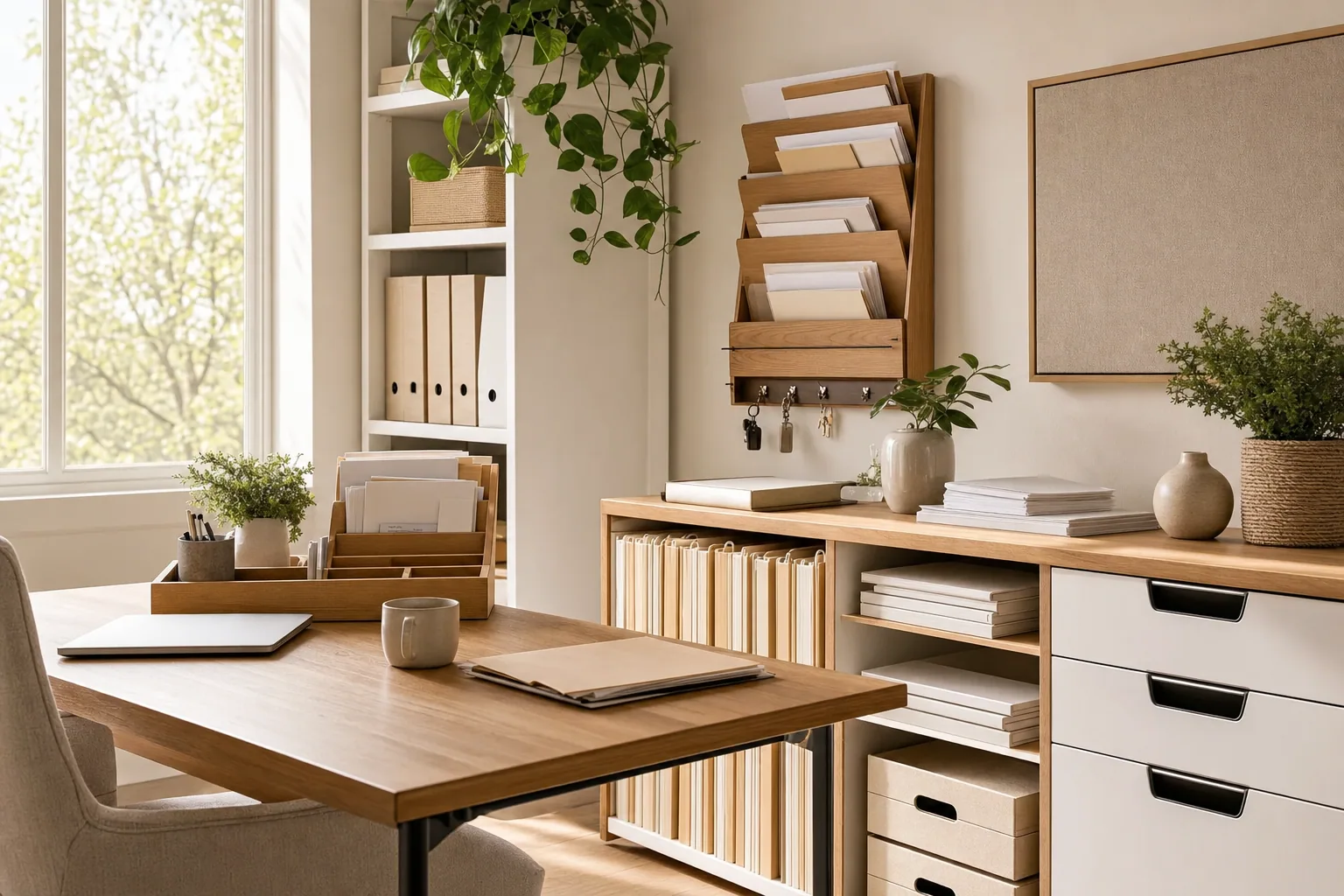
Paper clutter is one of the biggest sources of household stress. Between bills, statements, insurance documents, school papers, and junk mail, it's easy for paper to take over your home. The good news is that a thoughtful mail organization system doesn't require complex filing cabinets or hours of sorting. Instead, you need a simple paper filing system that fits your daily rhythm and keeps what matters within arm's reach.
Start With a Dedicated Mail Station
The foundation of any successful mail organization strategy is having a single, consistent place where mail lands when it enters your home. This central mail station becomes the control point for everything paper-based.
Choose a high-traffic area near your main entry or kitchen. This might be a wall-mounted organizer, a small desk, or even a decorative tray on a shelf. The location matters less than consistency. When everyone in your household knows mail goes to one spot, you prevent papers from scattering across countertops, tables, and chairs.
Your mail station should include:
- A tray or basket for incoming mail
- Scissors or a letter opener
- A container for recycling junk mail immediately
- Sticky notes or a notepad for quick reminders
Spending just five minutes daily at your mail station prevents a week's worth of backlog. Open mail, sort it into categories, and immediately recycle what you don't need.
Create a Simple Paper Filing System
A good home mail station idea goes beyond just catching incoming mail. You need a system for what happens next. Many people overthink filing. You don't need dozens of categories or a color-coded system. Start with broad, practical categories that match your life.
Common categories include:
- Bills and Statements
- Insurance Documents
- Medical Records
- Tax and Financial
- Home and Property
- Warranties and Manuals
- Education and Training
- Personal and Legal
- Kids and Family
- Household Receipts
Within each category, you can add subcategories if needed. For example, under Bills and Statements, you might have Utilities, Credit Cards, and Subscriptions. Keep it simple enough that you know where to find something six months from now.
File folders work well for physical papers, but you can also use a drawer organizer or a filing box designed specifically for this purpose. The system only works if you can easily locate documents when you need them.
Go Digital With What You Can
Not every piece of paper needs to live in your filing system. Digitizing important documents reduces physical clutter significantly. Take photos or scan documents that you need to keep but don't reference frequently.
Set up simple digital folders on your computer or cloud storage that mirror your physical filing system. Upload scans monthly and shred the originals once you confirm the digital copy is clear and readable. Keep originals only for critical documents like birth certificates, property deeds, or legal agreements.
Many companies now offer online account access, meaning you don't need to keep paper statements at all. Set up digital delivery for bills, bank statements, and insurance documents. This cuts paper volume dramatically without losing access to information.
Manage Junk Mail and Unwanted Paper
Much of the paper entering your home isn't worth keeping. Reducing the incoming flow is as important as managing what stays.
Take these steps to cut junk mail:
- Unsubscribe from mailing lists at checkout when shopping online
- Call credit card companies and ask to stop receiving promotional mail
- Register with the Direct Marketing Association to reduce catalog and solicitation mail
- Request removal from marketing lists by visiting unsubscribe websites
- Shred sensitive documents with your personal information before recycling
The less mail that enters your house, the less you have to organize. Reducing the source solves half the problem.
Set Up a System for Family Documents
If you have kids, school papers, permission slips, and artwork can quickly become overwhelming. Designate a folder or bin for current school papers, and review it monthly. Keep a few favorite artwork samples and important records, then recycle the rest.
For each child, maintain a folder in your filing system with essential documents: vaccination records, medical history, school records, and insurance information. This keeps crucial papers organized and accessible when you need them.
Create a simple household calendar or checklist in your mail station area to track important dates like bill due dates, insurance renewal dates, or doctor appointments. Writing them down prevents papers from being your only reminder.
Maintain Your System With Simple Habits
Organization only works if you stick with it. Building small habits keeps your paper filing system functional over time.
Set a weekly appointment to process mail. Spend 10 to 15 minutes sorting, filing, and recycling. This rhythm keeps papers from piling up and feeling overwhelming. Monthly, review your filing system to ensure documents are in the right places and nothing has been misfiled.
Quarterly, purge old documents you no longer need. Tax records typically need seven years; most bills and statements can go after one year; junk mail can go immediately. Knowing your retention timeline prevents your files from growing indefinitely.
Label everything clearly. Use a label maker or write neatly on folder tabs. When your system is easy to read, you and family members will actually use it.
The Long-Term Payoff
A thoughtful mail organization system gives you peace of mind and saves time. You know where documents are when you need them, bills don't get missed, and important papers don't get accidentally thrown away. The investment of a few minutes daily prevents hours of frustration searching for lost statements or misplaced receipts.
Start with a dedicated mail station, build a simple filing system that matches your household, and commit to weekly maintenance. The specific products you use matter far less than the consistent habits you build around them. Once your paper system is in place, you'll find that keeping your home organized extends beyond just papers, creating a calmer and more intentional living space.