

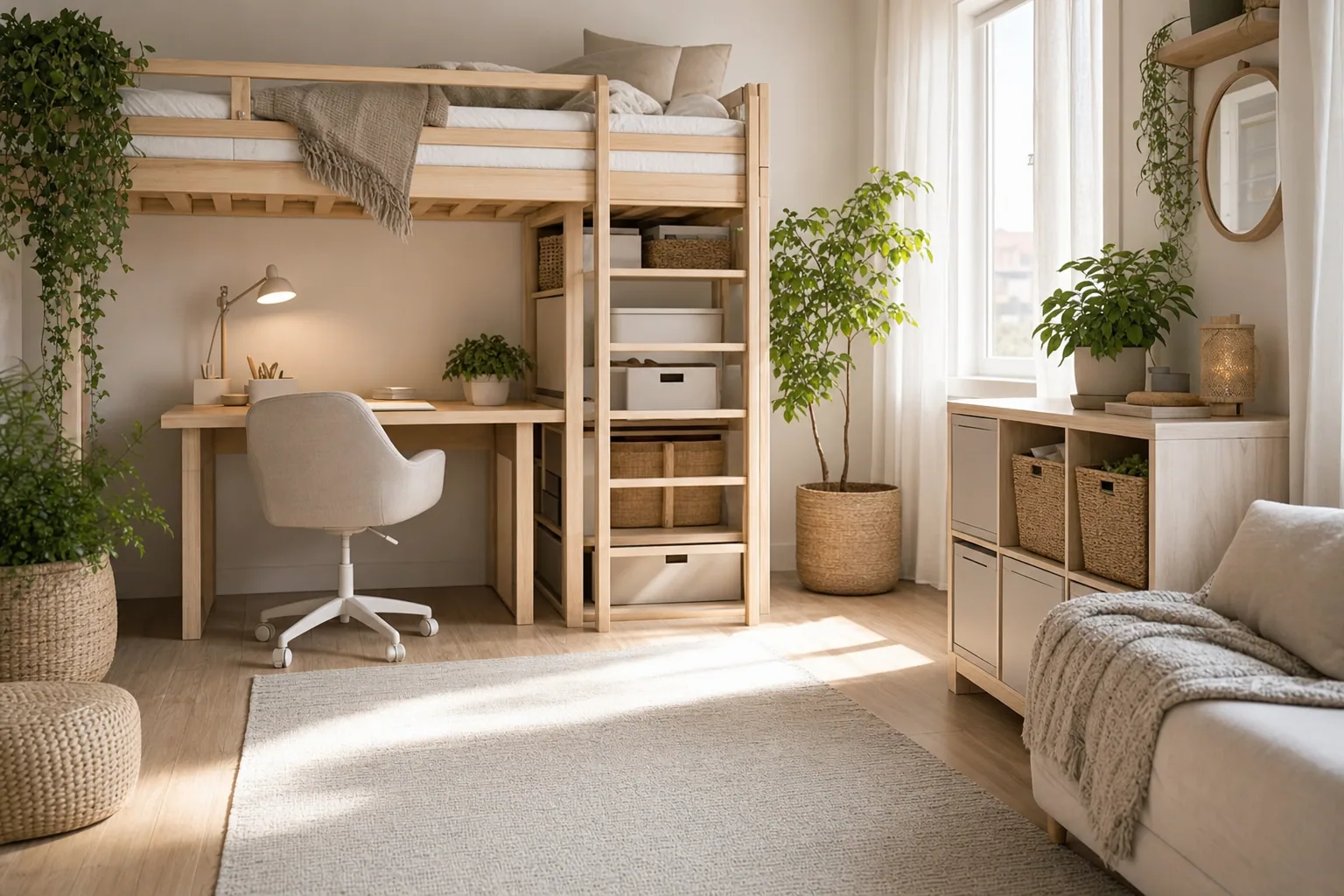
Small spaces demand smart thinking. Whether you're working with a studio apartment, a bedroom that doubles as an office, or a playroom that needs to handle multiple activities, the key is choosing furniture and layouts that earn their place by doing more than one job. The challenge isn't the square footage. It's intentional arrangement.
Make Every Piece Work Double Duty
When space is limited, every furniture choice matters. Multi-functional pieces aren't a compromise; they're the foundation of a livable small room. A storage dresser, for example, gives you drawers while providing a surface for a lamp or workspace. A desk with shelving above offers filing and display without requiring a separate bookcase. Look for ottomans with hidden storage, beds with drawers underneath, and tables that expand when you need them.
The goal is simple: remove the single-purpose furniture that wastes space. If a piece only serves one function and doesn't anchor the room's layout, it's taking up real estate you don't have.
Plan Vertical, Not Just Horizontal
Small rooms feel cramped when furniture spreads out horizontally. Shift your thinking upward. Floor-to-ceiling shelving, tall storage cabinets, and wall-mounted organizers draw the eye up and create the illusion of height. This strategy opens up floor space while giving you plenty of storage.
Consider these vertical solutions:
- Wall-mounted shelves above desks or nightstands
- Tall, narrow bookcases that fit in corners
- Pegboards or hanging systems for frequently used items
- Over-door organizers for shoes, accessories, or office supplies
- Lofted beds with desk or storage underneath
Vertical storage is especially useful in bedrooms that also function as offices or kids' rooms that serve as playrooms. You gain function without sprawling into the center of the room.
Create Zones Within the Space
A multipurpose room works best when different activities have their own zone, even if they're just feet apart. Rugs, lighting, and furniture placement define these areas without requiring walls. A desk in one corner with task lighting feels separate from a seating area, even in a small footprint.
Zoning helps your brain switch between activities. When you're sitting at the desk, you're working. When you move to the other side of the rug, you're relaxing. This psychological shift makes small spaces feel larger and more intentional.
Use area rugs, bookcases, or room dividers to delineate zones. A single console table can separate a sleeping area from a workspace. Lighting should anchor each zone: bright task light at the desk, softer ambient light in the seating area.
Choose Modular and Flexible Furniture
Modular furniture adapts to your needs. Sectionals with removable cushions, transformable kids' play couches with multiple configurations, and adjustable shelving let you reconfigure as life changes. This flexibility is invaluable in small spaces where you can't simply add another room.
When shopping, look for pieces that slide, fold, or nest. A sofa bed works for guests without taking up office space year-round. Nesting tables provide surface space when you need it but stack away when you don't. Drawers and storage bins keep clutter invisible while staying accessible.
Use Light and Color Strategically
The way your small room feels depends as much on light and color as it does on furniture arrangement. Light colors on walls and large furniture make spaces feel more open. Mirrors reflect light and create depth. Layered lighting (task, ambient, and accent) makes the room feel larger than it is and helps define zones.
Keep wall color light and neutral if you want maximum visual space. Use deeper colors or bold patterns on smaller accessories that you can swap out. Good lighting matters more in small rooms. A single overhead fixture creates shadows and makes spaces feel cramped. Combine overhead lights with desk lamps, wall sconces, and accent lights to brighten every area and add visual interest.
Minimize Visual Clutter
In small spaces, clutter feels amplified. A room full of visible items makes even a larger space feel cramped. Storage that hides things is your friend. Closed cabinets, drawers, and baskets under tables keep daily items out of sight. Open shelving should display only items you actually use or love.
Organization systems matter too. A file organizer keeps papers neat on a desk. Labeled bins make it easy to find what you need without dumping everything on the floor. The smaller your room, the more critical organization becomes.
Real-World Layout Examples
Here are common small-space scenarios and how to arrange them:
Bedroom plus office: Place the desk perpendicular to the bed, using a rug to define the workspace. Mount shelves above the desk for files. A bedside table with drawers replaces a nightstand, saving space.
Living room plus guest bedroom: A convertible sofa bed anchors the living area and converts for overnight guests. A storage dresser doubles as a media console. A tall bookcase divides the space visually without a wall.
Playroom plus homework space: Modular play furniture lets kids rearrange throughout the day. A compact desk with wall-mounted storage handles schoolwork. Storage bins on shelves keep toys organized and out of the way during study time.
The common thread: every piece serves more than one purpose, and the room's layout changes based on what's needed at that moment.
The Bottom Line
Small-space living is about intention, not deprivation. When you choose furniture that works harder, arrange it in clear zones, and organize what you keep, even a modest room feels calm and functional. The spaces where we work, sleep, and relax don't need to be large. They need to be thoughtfully planned.
Explore Mrs. Mattie's collection of multi-functional furniture, storage solutions, and space-saving designs that turn small rooms into livable havens. From modular pieces to tall storage cabinets, discover how smart choices make daily life feel more organized and intentional.