

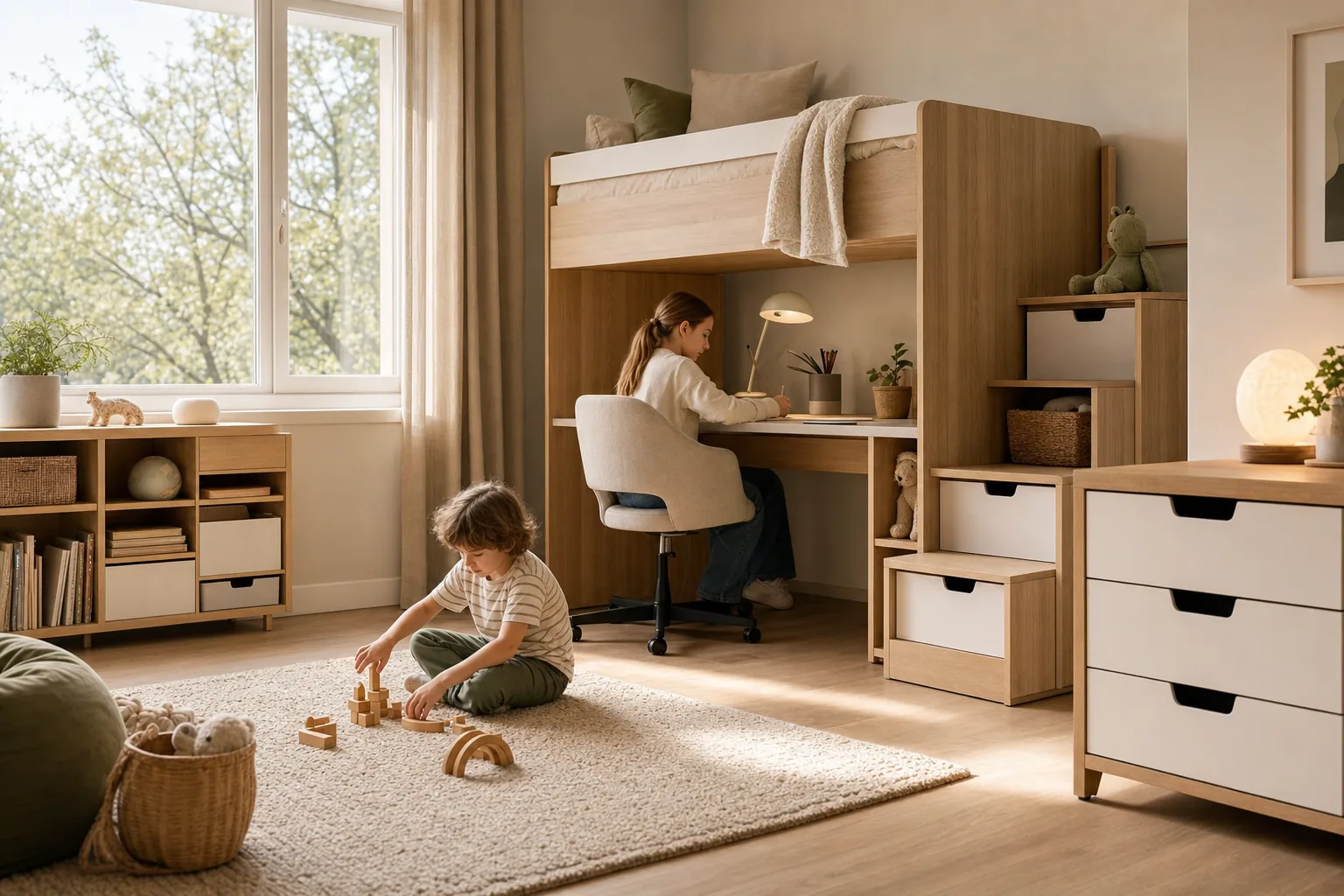
Your child's bedroom is a space that evolves constantly. What works for a toddler won't suit a ten-year-old, and what a preteen needs differs entirely from a teenager's preferences. Instead of replacing furniture every few years, smart parents invest in pieces designed to adapt alongside their growing child.
Kids bedroom furniture that grows with them balances durability, flexibility, and style. These pieces let you adjust layouts, repurpose storage, and update aesthetics without starting from scratch. The result is a room that feels fresh throughout childhood while your wallet stays healthier.
Why Growth-Focused Furniture Matters
Children change fast, and their rooms need to keep pace. A crib becomes a toddler bed, then a twin, then possibly a full-size mattress. A changing table transforms into regular dresser once those early years pass. Shelves that hold picture books later hold school supplies and sports gear.
When you choose furniture built for longevity and adaptation, you're not just saving money on replacements. You're also creating stability in your child's space. Familiar furniture that simply changes function or layout provides comfort during transitions, whether that's starting school or entering adolescence.
Quality pieces also develop character over time. A solid wood dresser grows more beautiful with use and can easily be refinished if needed. Storage units built with real materials age better than particleboard alternatives, making them worth the investment.
Loft Beds for Kids: The Ultimate Space Multiplier
Loft beds for kids are perhaps the smartest investment you can make in a growing bedroom. These elevated structures open up space underneath for desks, seating, or additional storage. As your child ages, the function changes without replacing the bed itself.
A young elementary-school child might use the space below for a reading nook with cushions and low shelving. By middle school, that same area becomes homework central with a desk and chair. As a teen, it might transform into a lounge space for hanging out with friends.
Look for loft beds with built-in features like drawers, shelves, or integrated desks. Some designs include a work surface that can be repositioned or removed. Sturdy wood construction ensures the bed stays stable and attractive through years of use. Guard rails and quality ladder design keep younger kids safe while allowing for independent use as they grow.
The beauty of this approach is that you're not limited to traditional configurations. Some families use the space below for a second bed, creating room for sleepovers. Others add a small hanging swing or install shelving. The structure itself stays constant while its purpose evolves with your child.
Modular Storage and Dressers That Adapt
Storage is the other pillar of adaptable bedroom design. Children accumulate clothes, toys, books, sports equipment, and school supplies. The volume and type of items they own shifts dramatically across age groups.
Modular dresser systems let you add or remove components as needs change. A small dresser works for a toddler's limited wardrobe. As clothing volume grows, you can add a second unit or stack additional drawers. When your child moves to a smaller dorm room or apartment, you can separate the pieces rather than replacing them.
Look for dressers made from solid wood or quality plywood rather than particleboard. Wooden pieces can handle the wear and tear of childhood while maintaining their integrity. They also work in various room styles, so you can shift from playful colors and decals to more mature aesthetics without replacing the underlying furniture.
Drawers with smooth glides make it easier for kids to manage their own organization, an important life skill. Durable hardware withstands years of opening and closing. Some families appreciate dresser designs that include mirrors or small shelving components, adding functionality without consuming extra floor space.
Desks That Transition From Play to Work
As children age, homework and personal projects require dedicated workspace. Rather than adding a desk when schoolwork increases, consider investing in one early that can grow with your child.
Smaller desks work for early elementary activities like coloring and simple projects. The same desk serves a middle-schooler managing homework and creative projects. By high school, if the desk is sturdy and spacious enough, it becomes a command center for studying and digital work.
Choose desks with adjustable components when possible. Some designs feature shelving that you can add or remove. Others have surface tops that can be swapped for larger versions. Cable management features help as your child eventually needs charging stations for phones and laptops.
If space is tight, a small desk paired with a loft bed structure solves the problem. The desk tucks underneath, creating a workspace without consuming extra floor space. This setup grows naturally from homework station to study area to personal creative space.
Bedding, Lighting, and Easy Style Updates
When furniture stays constant, changing small elements refreshes a room's entire feel. This approach lets your child's personality evolve while keeping larger investments intact.
Bedding is the easiest place to update style. Swap playful patterns for more sophisticated designs as your child's taste matures. Wall art changes just as easily. A toddler's bright animal posters transition to sports equipment, band posters, or gallery walls as interests develop.
Lighting affects how a room feels and functions. Overhead lights work for young kids, but adding a desk lamp supports homework needs. A dimmer switch or small accent lighting creates flexibility. As your child gets older and spends more time in their room, proper lighting becomes increasingly important for both mood and productivity.
The key is choosing neutral or timeless furniture pieces that accommodate style changes without looking dated. A solid wood bed frame in natural tones works with any decor direction. Furniture in whites, grays, or classic wood finishes provides a stable backdrop while your child's accessories tell their story.
Creating Room for Independence and Growth
Beyond the physical components, growth-focused bedroom design supports your child's developing independence. A well-organized space with accessible storage teaches self-care and responsibility. A desk in their own room creates a place for focused work and creative thinking.
When furniture is scaled appropriately to your child's current size but built to last, it sends a message: this space is yours to grow into. A sturdy dresser that they can reach and manage teaches organization. A comfortable desk supports concentration and learning.
The most successful kids' bedrooms balance stability with flexibility. The core pieces stay, but their purpose and the surrounding accessories adapt. Your child feels secure in familiar furniture while still having room to express their changing interests and developing identity.
Make Smart Choices Today
Investing in quality kids bedroom furniture that grows with your child requires upfront thought but pays dividends over years of use. Look for pieces built from solid materials, designed with longevity in mind, and flexible enough to serve different purposes across childhood stages.
Loft beds for kids and modular storage systems offer the most versatility. A simple, well-made desk handles years of different uses. Quality dressers age beautifully and stay functional through multiple style iterations.
When you choose thoughtfully, your child's bedroom becomes a space that evolves naturally with them, supporting their needs at every age while building a foundation of stability and comfort.