

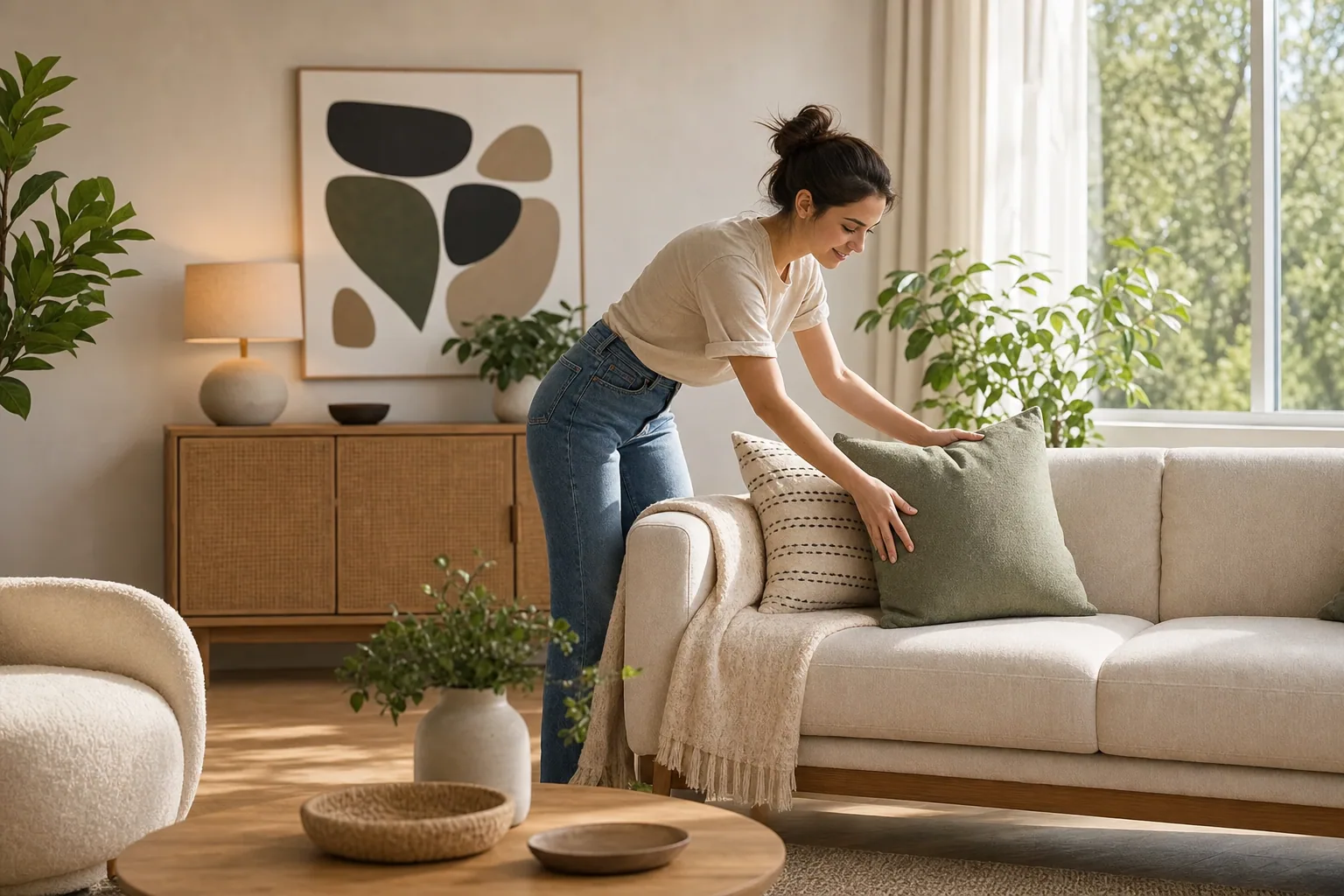
Styling a modern home doesn't require deep pockets or luxury price tags. With smart choices and intentional design decisions, you can create a space that feels contemporary, calm, and entirely yours on a budget. The key is understanding what makes modern design work, then finding affordable ways to bring those principles to life.
What Modern Design Really Means
Modern home decor comes down to a few core ideas: clean lines, minimal clutter, function-first thinking, and a restrained color palette. It's not about having the most expensive pieces. It's about choosing pieces that have a clear purpose and letting them breathe in your space. That philosophy actually makes budget-friendly design easier, because you're not chasing trends or filling space with unnecessary items.
The best modern homes have fewer things, but those things are chosen carefully. This naturally keeps costs down because you're buying less overall, while still creating impact.
Start with a Simple Color Foundation
Your color scheme is the fastest way to set a modern tone without spending much. Stick to a neutral base like white, soft gray, beige, or warm gray for walls and larger pieces. Then add depth with two or three accent colors through smaller items like throw pillows, artwork, or plants.
This approach lets you:
- Repaint or refresh on a budget whenever you want a subtle shift
- Keep furniture versatile so pieces work across multiple rooms
- Make smaller decor purchases feel like they transform the whole space
- Avoid clashing styles that happen when too many colors compete
Neutrals are your budget ally because they never go out of style, and they let your furniture and design choices stand out without needing to match everything perfectly.
Invest Selectively in Furniture
Home decorating on a budget means making trade-offs. Rather than spreading money thin across many pieces, choose two or three anchor items and make them count. A solid sofa, a good bed, or a sturdy dining table are things you use every day and will keep for years.
For other pieces, affordable options work fine. A basic coffee table, simple bookshelf, or straightforward dresser still fits modern style when it has clean lines and minimal hardware. Look for pieces that are functional first and won't feel dated in two years.
Consider mixing price points: spend more on seating or your main bed, but find budget-friendly options for side tables, storage, or office furniture. This approach keeps your total investment reasonable while ensuring your most-used pieces are solid.
Budget Friendly Home Design Through Smart Shopping
Where you shop matters as much as what you buy. Mrs. Mattie offers a curated selection of furniture and home goods across multiple price ranges, with frequent flash sales and significant discounts that can stretch your budget considerably.
Shopping strategically means:
- Waiting for sales before committing to larger purchases
- Browsing across categories to find unexpected pieces that fit your style
- Comparing similar items to understand what you're actually paying for
- Reading reviews from other buyers to avoid costly mistakes
Digital resources can also help. Mrs. Mattie offers downloadable guides and eBooks on home organization and design planning that cost far less than hiring a designer, yet give you professional-level thinking you can apply to your own space.
Use Lighting and Mirrors to Expand Space
Modern homes feel open and thoughtfully lit. You don't need expensive lighting fixtures to achieve this. Simple pendant lights, track lighting, or clean-lined floor lamps in white or matte black cost far less than designer statement pieces but deliver the same effect.
Mirrors are one of the most affordable ways to make a space feel larger and brighter. A simple mirror with a minimal frame placed opposite a window reflects light and opens up the room instantly. This strategy costs little but transforms how a space feels.
Layering different light sources (overhead, task, and ambient) is a modern design principle that makes any space feel intentional and grown-up, no matter your budget.
Bring in Greenery and Natural Textures
Plants and natural materials are modern design staples that don't break the bank. Low-cost houseplants or even simple potted greenery add life to shelves, corners, and side tables. They soften hard edges in modern spaces and improve air quality as a bonus.
Natural textures like wood, wool, linen, and jute also ground modern spaces and prevent them from feeling cold or sterile. A simple jute rug, a wooden picture frame, or linen curtains add warmth while staying true to modern principles. These items are often cheaper than their synthetic alternatives anyway.
You don't need rare or exotic plants. Common varieties like pothos, snake plants, or low-light tolerant options thrive with minimal care and cost only a few dollars.
Declutter and Organize as Your Design Tool
The most underrated budget strategy is removing what you don't need. Modern spaces rely on negative space. Empty shelves, clear surfaces, and thoughtful storage make a home feel modern and calm without you buying anything new.
Before purchasing new decor, organize what you have. Invest in simple storage solutions like clear containers, basic shelving, or affordable organizers that make your existing items visible and accessible. A well-organized space with fewer things often feels more modern than a decorated space packed with stuff.
This aligns perfectly with the home organization bundles and checklists available through Mrs. Mattie, which guide you through decluttering and space-planning without expensive professional help.
Bring in Affordable Art and Accessories
Art and accessories are where you can express personality affordably. Simple line drawings, geometric prints, or abstract pieces in minimal frames cost a fraction of original art but feel intentional and modern. You can even print and frame your own designs if you have a printer and basic frame.
Accessories like throw pillows, blankets, ceramic vases, or simple sculptures should be few and well-chosen rather than numerous. Each piece should either serve a purpose or spark joy. This restraint is what makes modern spaces feel curated and expensive, even on a modest budget.
Conclusion
Styling a modern home on budget is entirely achievable when you focus on clean lines, intentional choices, and smart shopping. You don't need a designer budget or a houseful of expensive furniture. Instead, choose anchor pieces wisely, keep your color palette simple, embrace open space, and leverage affordable resources for planning and organization. Modern design rewards restraint, and restraint is something anyone can afford. Start with the principles that matter most to your space, shop thoughtfully for a few key pieces, and build from there. Your home will feel more intentional, calm, and distinctly yours as a result.