

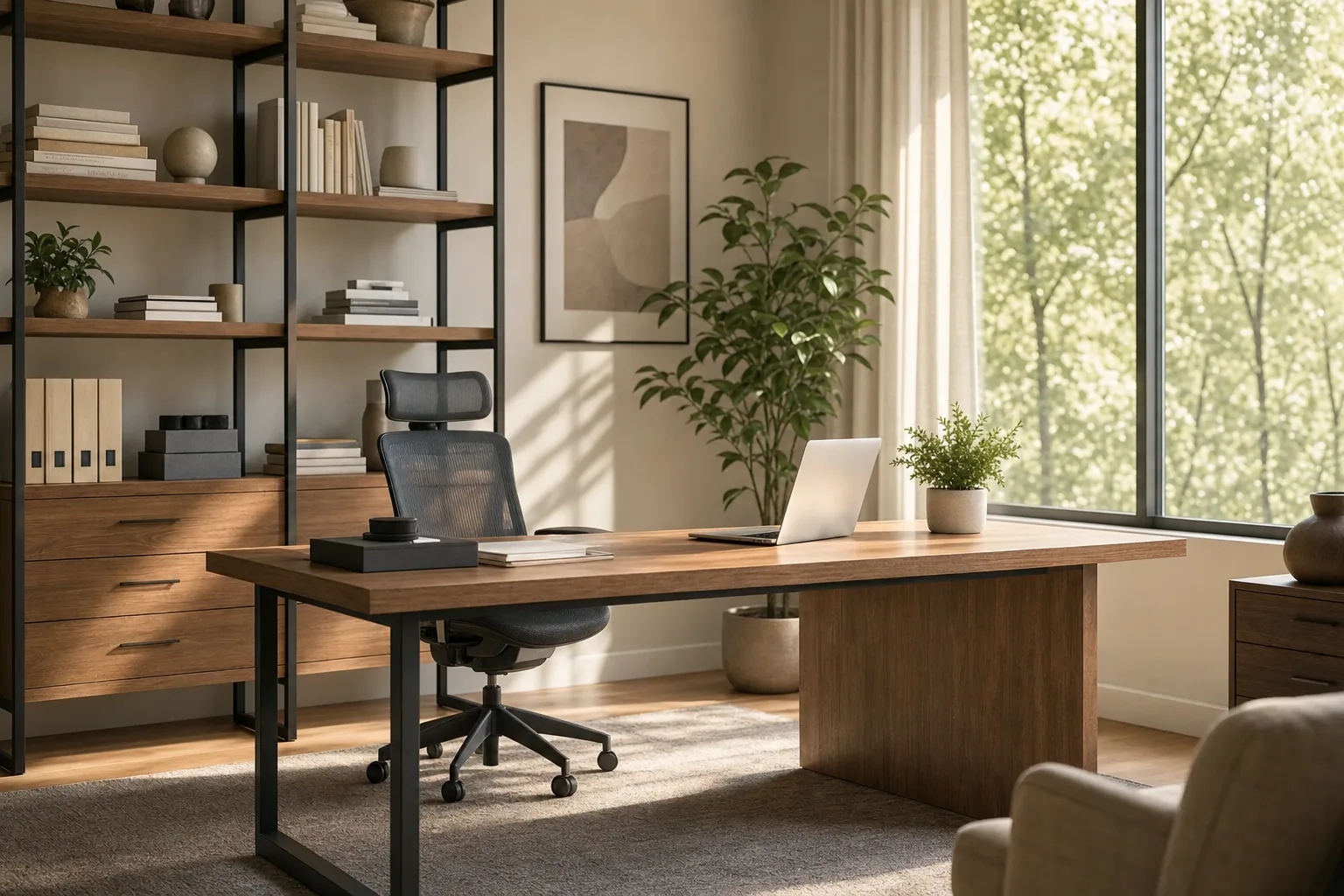
Working from home has become the norm for many, but a makeshift desk in a corner does not make for a productive workspace. A well-planned home office setup sets the tone for focus, efficiency, and professional work. Whether you are converting a spare bedroom or carving out space in a living area, the right functional home office design transforms how you work.
Start with Your Space and Layout
Before buying anything, understand what you are working with. Measure your room or designated area and consider natural light, electrical outlets, and foot traffic patterns. The best location is away from distractions like televisions or household noise, but close enough to natural light to reduce eye strain.
Your furniture arrangement matters more than you might think. Position your desk perpendicular to a window rather than facing a blank wall. This gives you a view while keeping glare off your screen. If space is tight, an L-shaped desk maximizes usable surface area without overwhelming the room. Consider sight lines too, so you do not feel exposed to passing family members or guests.
Choose Furniture That Supports Productivity
The foundation of any home office setup is a desk that fits your work style. A spacious work surface gives you room for your computer, documents, and reference materials without constant shuffling. Look for a desk with storage built in, like drawers or shelves, so supplies stay within reach but out of view.
Your chair deserves equal attention. You will spend hours in it, so invest in one that supports your back and allows for adjustment. Proper ergonomics prevent strain and fatigue that derail your workday. A quality chair should have adjustable height, armrests, and lumbar support.
Storage furniture rounds out the essentials. A small cabinet, credenza, or shelving unit keeps files organized and equipment hidden from view. This is where home office furniture ideas get practical: think vertical storage for small spaces, or a credenza that doubles as a side table.
Tackle Small Home Office Organization
When space is limited, organization becomes critical. Small home office organization relies on smart storage solutions that do not take up floor space.
Here are effective strategies:
- Use wall-mounted shelves above your desk for frequently used items
- Install a pegboard for hanging supplies and cables
- Choose a desk with built-in drawers to minimize surface clutter
- Use filing cabinets or rolling carts that tuck under the desk
- Label everything so you know exactly where to find what you need
- Keep only active projects on your desk; file or store completed work immediately
Vertical space is your friend in a small office. Wall shelves, tall cabinets, and overhead storage make a huge difference. Wire management also matters more in tight quarters, so use clips, cable boxes, or sleeves to keep cords from creating visual chaos.
Design for Focus and Comfort
Your environment directly affects your ability to concentrate. Lighting is fundamental: natural light is ideal, but add a desk lamp for tasks that need precision. Avoid harsh overhead lights that cause headaches and fatigue.
Color and decor influence mood and focus. Neutral walls and minimal clutter create a calm backdrop that does not distract. A single piece of wall art or a small plant adds personality without overwhelming the space. Keep personal items to a few meaningful pieces rather than filling every surface.
Sound matters too. If you work with background noise from family, pets, or traffic, consider a white noise machine or noise-canceling headphones. Some people work better with soft ambient sound, so test what helps you concentrate.
Temperature control is often overlooked but essential. A home office that is too hot or cold derails focus, so make sure your space has adequate ventilation or heating.
Organize Your Office with Practical Systems
How to organize a home office goes beyond where things live. It includes creating systems that keep work flowing smoothly. Start by categorizing what you use daily versus occasionally.
Daily-use items (pens, notepads, reference materials) should be within arm's reach. Weekly or monthly items can go in a drawer or nearby shelf. Rarely used supplies belong in a cabinet away from your main work surface.
Document management is critical. Set up a filing system, whether digital or physical, so you can find what you need instantly. A label maker and color-coded folders take minutes to set up but save hours of searching.
Cables and cords need their own plan. Use cable ties, clips, or tubes to bundle wires and route them out of sight. Label each cable at both ends so swaps and troubleshooting are quick. A power strip with USB ports consolidates charging and reduces clutter.
Invest in Tools That Support Your Workflow
The right accessories make a functional home office truly shine. A document holder at eye level reduces neck strain. A monitor stand lifts your screen to proper viewing height. A keyboard and mouse at elbow level prevent wrist strain.
Consider an adjustable phone stand if you take video calls. A foot rest or under-desk footrest improves posture during long hours. These ergonomic supports seem small but compound into real comfort over weeks and months.
Storage containers, drawer organizers, and desk accessories keep everything in its place. Clear containers let you see what you have without opening them. Drawer dividers prevent supplies from jumbling together.
Make It Yours
A functional home office is one you actually want to work in. That means it should reflect your taste while supporting focus and productivity. Add a small plant, a meaningful piece of wall art, or a calendar that motivates you. Keep it professional enough that you feel productive, but personal enough that you do not feel like you are sitting in a sterile cubicle.
Your home office is an investment in how you work. Taking time to plan it thoughtfully, choose the right furniture and organization systems, and optimize for comfort pays dividends every single workday. Start with these fundamentals, then adjust as you learn what you actually need. Mrs. Mattie offers home office furniture and organization solutions that blend quality with value, making it easier to create the productive workspace you deserve.