

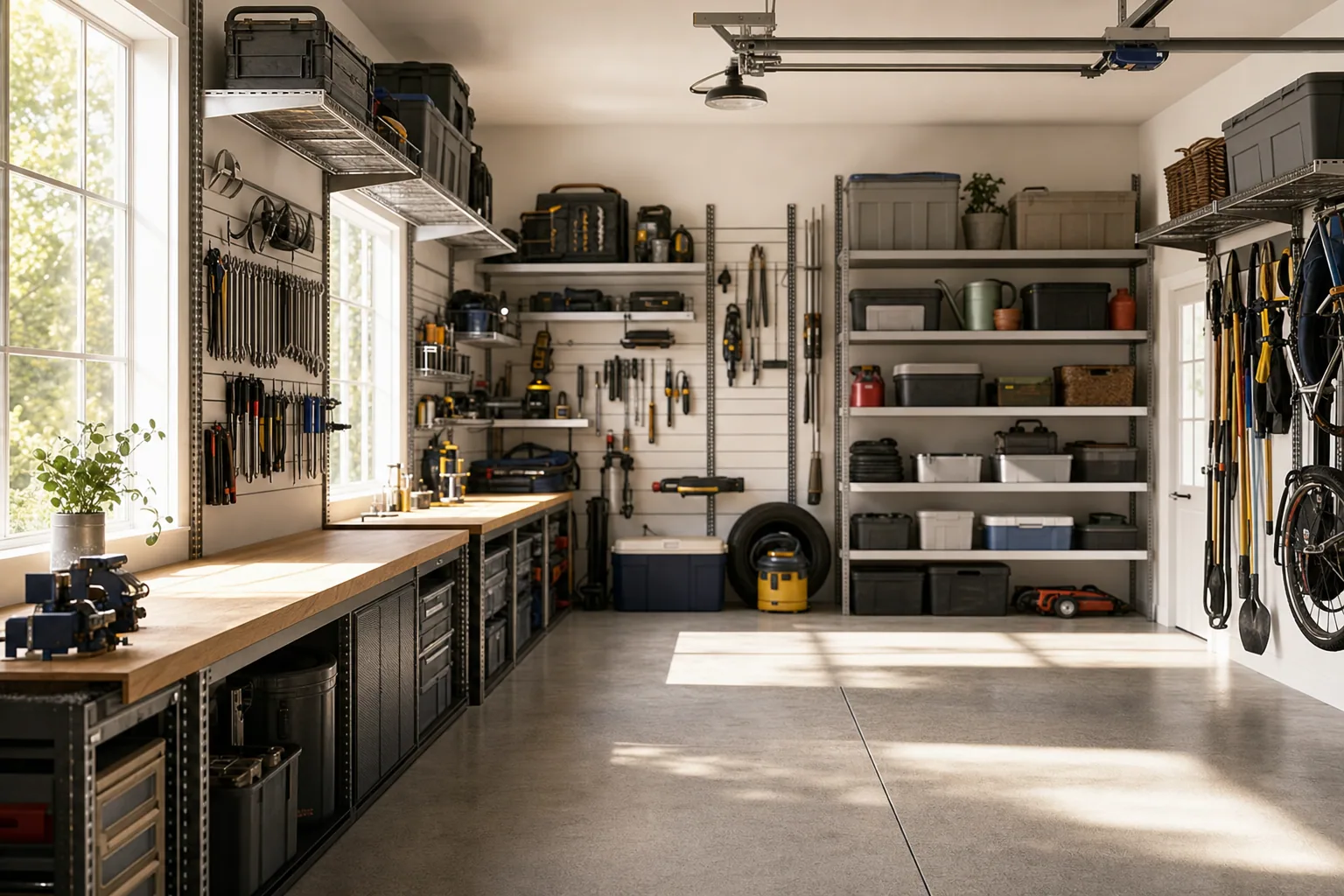
A disorganized garage is a lost opportunity. What should be a functional space often becomes a dumping ground for seasonal items, tools, and things you're not sure where else to put. But with the right approach to garage organization, you can reclaim that square footage and actually find what you need when you need it.
Garage storage doesn't require expensive renovations or complicated systems. It starts with a plan, a willingness to declutter, and smart use of vertical space. Whether you have a tiny garage or a sprawling workshop, these strategies will help you build a space that works for your household.
Start with a Garage Declutter
Before you buy a single shelf or bin, sort through what's already there. Pull everything out if you can, or work section by section. Be honest about what you actually use.
Sort items into these categories:
- Keep and use regularly (tools, seasonal items you rotate, car care supplies)
- Keep but use rarely (holiday decorations, sports equipment that sits for months)
- Donate or sell (broken items, duplicates, things you've outgrown)
- Trash (anything damaged beyond repair)
This step cuts down on clutter and makes it easier to plan your storage system. You'll know exactly how much space you need for what matters, rather than designing a system around items destined for the donation pile.
Use Vertical Space for Garage Shelving Systems
Floor space is precious in most garages. Vertical space is free. Investing in the right garage shelving systems transforms how much you can store without taking over your parking area.
Wall-mounted shelves work best for:
- Hand tools and small equipment
- Paint cans and chemical supplies
- Seasonal decorations in labeled containers
- Gardening tools and supplies
- Bins and storage boxes
Choose heavy-duty metal shelving that can handle weight. Measure your wall space and consider open shelves for items you access often, or closed cabinets for things that need protection from dust and moisture. Make sure mounting hardware is secured into wall studs, not drywall alone.
Pegboards are another smart vertical solution. They're customizable, visible, and perfect for organizing hand tools so you can see everything at a glance. Arrange similar items together: a section for hammers and mallets, another for screwdrivers and wrenches.
Create Zones for Different Item Categories
A well-organized garage has a purpose for every corner. Creating zones keeps like items together and makes your space feel intentional rather than scattered.
Common garage zones include:
- Tool station: Wall-mounted pegboards, tool chest, or rolling cabinet near the workbench
- Seasonal storage: High shelves or back corner for holiday decorations, outdoor furniture
- Automotive area: Oil, filters, car cleaning supplies, and maintenance items
- Recreational gear: Bikes, sports equipment, camping gear on hooks or racks
- Hazardous materials: Paint, chemicals, gasoline stored safely away from living spaces
- Lawn and garden: Leaf blower, pruners, bags of soil, pots, and hoses
Label everything clearly so everyone in your household knows where things belong. This prevents items from being shoved anywhere and keeps your organization system from unraveling within weeks.
Choose the Right Storage Containers
Plastic bins, metal cabinets, and clear containers all have their place in small garage organization. The key is choosing the right type for each category of items.
Clear plastic bins let you see contents without opening them. They work well for seasonal decorations, kids' toys, or anything you need to identify quickly. Label the front and top so you can find what you need whether the box is on a high shelf or in a stack.
Opaque bins hide clutter visually, which matters if your garage is visible from your home or driveway. Reserve these for things you rarely need to access.
Metal or wooden cabinets with doors are ideal for hazardous materials, expensive tools, or items you want protected from dust and pests. They also look more finished than open shelves and can serve double duty as a workbench surface.
For small garage organization, stackable bins and wall-mounted organizers maximize limited floor space. Overhead storage racks can hold lighter seasonal items or rarely used equipment.
Install Hooks, Racks, and Wall Anchors
Hooks and wall-mounted racks are the unsung heroes of garage storage. They cost little, install quickly, and open up new possibilities for what you can organize.
Use hooks for:
- Bicycles and scooters
- Hoses and extension cords (coiled neatly)
- Ladders
- Sports equipment like baseball bats, hockey sticks, tennis rackets
- Bags and backpacks
- Chains, straps, and cables
Racks designed for specific items like bikes or ladders keep them off the floor and make them easy to grab. Coiled hoses and cords take up far less space than piled on the ground. Heavy-duty hooks rated for weight prevent accidents and keep your valuable equipment safe.
Measure twice before installing anything. Mark stud locations with a stud finder, then use appropriate anchors for your wall type. This ensures hooks and shelves will hold weight safely for years.
Keep It Maintainable Long-Term
The best garage organization system is one you can actually maintain. If your setup is too complicated or requires constant rearranging, it will fall apart within months.
Stick to these principles:
- Keep frequently used items at eye level and within arm's reach
- Store heavy items on lower shelves
- Group similar items together
- Label everything, even if it seems obvious
- Do a quick sort every few months
- Don't keep items "just in case" if you haven't used them in a year
Schedule a 15-minute tidy-up every month. Return items to their zones, pull out anything broken, and clear any new clutter that's crept in. This prevents your garage from sliding back into chaos.
Make Your Garage Work for Your Life
An organized garage gives you back more than just space. It saves time when you're looking for something, reduces stress when you walk in, and makes your home feel more intentional. You'll know what you own, where it is, and why it's there.
Start small if a complete overhaul feels overwhelming. Pick one zone, organize it well, then move to the next. Once you see how much better a single corner looks and functions, you'll be motivated to tackle the rest. The goal isn't perfection. It's a garage that actually serves your household and makes your life calmer and more organized.