

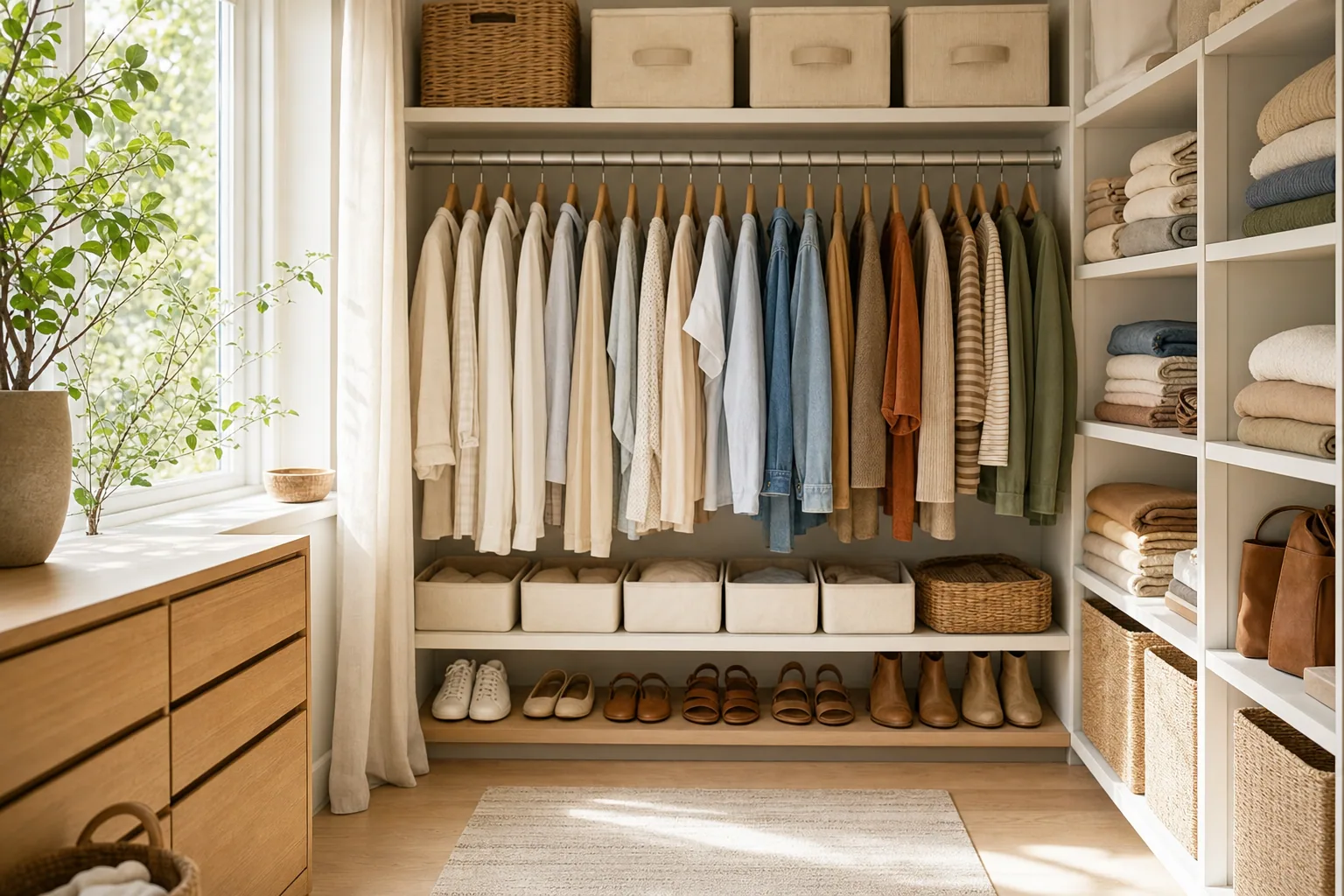
How to Create an Organized Closet System
Opening your closet should feel calm, not chaotic. A well-organized closet system saves you time getting dressed, helps you see what you actually own, and makes it easier to maintain order long-term. Whether you're working with a walk-in closet or a tight space, the principles of good closet organization remain the same: declutter first, then organize by category and color, and invest in tools that keep everything visible and accessible.
Start with a Complete Closet Declutter
Before you buy a single organizer, you need to know what you're actually keeping. Pull everything out and sort items into three piles: keep, donate, and discard. Be honest about what you wear. If something hasn't been worn in over a year and doesn't fit right now, let it go. This step is non-negotiable because the best closet organization ideas won't work if you're storing things you don't love or need.
As you declutter, notice patterns. Do you have twenty white t-shirts but can't find anything to wear? Are you holding onto clothes that don't match your lifestyle? These insights will guide what you actually need going forward.
Establish Zones for Different Item Types
Organization starts with understanding what goes where. Create distinct zones in your closet for different clothing categories. Group all your dresses together, all your work clothes together, and all your casual wear together. Within each section, hang items on the same type of hanger for a cohesive look.
Your zone strategy might look like this:
- Work or formal clothes on one side
- Casual everyday wear in the middle
- Activewear or seasonal items on another section
- Accessories and belts on hooks or a dedicated rack
- Shoes displayed on a shelf or storage unit
This approach to closet organization makes it much easier to get dressed and prevents items from getting lost in the shuffle. When everything has a home, maintaining order becomes second nature.
Organize by Color Within Each Category
Once you've sorted by type, organize by color. This works especially well for clothing items like shirts, pants, and dresses. Arrange them from light to dark, or follow the rainbow: reds, oranges, yellows, greens, blues, purples, neutrals.
Color-based organization serves two purposes. First, it looks visually appealing every time you open your closet, which reinforces the habit of keeping things organized. Second, it helps you see at a glance what you have and what might be missing from your wardrobe. You'll notice if you have five pairs of black pants but no neutral trousers that work with your colorful tops.
Maximize Vertical and Hidden Space
Small closet organization requires you to think vertically. Use the full height of your closet by installing additional shelves above hanging rods, or adding tiered hangers that let you hang multiple items in the same vertical space. Wall-mounted hooks and racks can hold belts, scarves, and jackets without taking up shelf or rod space.
Under-shelf baskets, stackable boxes, and drawer organizers help you use dead space efficiently. Hanging organizers on the inside of your closet door can store accessories, socks, or folded items. The goal is to make every inch count, especially if you're working with limited square footage.
Choose Storage Tools That Support Your System
Your closet organization system is only as strong as the tools you use. Quality matters because cheap hangers slip, flimsy bins fall apart, and poorly designed organizers waste space.
Invest in:
- Uniform hangers in one or two styles that work with your aesthetic
- Drawer dividers to prevent folded items from shifting
- Clear containers so you can see what's inside without opening them
- Shelf dividers to keep stacks from toppling
- A dedicated shoe storage solution that displays your shoes while protecting them
- Wall hooks for frequently worn jackets and bags
Your choice of tools should match how you organize. If you color-organize your clothes, transparent storage lets you maintain that system even for off-season items. If you prefer open shelving with folded items, vertical dividers prevent everything from becoming a jumbled mess.
Make It Easy to Maintain Long-Term
The secret to keeping your closet organized is building a system that doesn't require heroic effort to maintain. This means your system should match your actual lifestyle and habits.
If you struggle to fold clothes neatly, hanging more items might be better than stacking them. If you forget where things go, label your bins and shelves so there's no guessing. If you buy new items frequently, make it a habit to declutter one section every month. When something new comes in, something old should leave.
The how to organize closet question always comes back to this: a sustainable system beats a perfect system every time. Build something you can actually live with.
Keep Your System Flexible
Your closet organization doesn't have to be static. Seasonal changes, new purchases, and lifestyle shifts all affect what you need from your closet. Review your system twice a year, especially as seasons change. Move heavy winter coats to secondary storage when spring arrives, and rotate in lighter layers. This keeps your everyday closet focused on what you actually wear right now.
Slight adjustments prevent the system from falling apart. Rather than waiting for complete chaos to return before reorganizing, spend fifteen minutes once a month tidying one section. This maintenance mindset keeps your closet calm and functional year-round.
A well-organized closet system transforms how you feel about your home and how you start each day. When you can see everything you own, find what you need in seconds, and maintain order without stress, your closet becomes an asset rather than a source of frustration. Start with decluttering, establish clear zones, and choose storage tools that work with your lifestyle. You'll be amazed at how such a simple system can make everyday life feel more intentional and calm.