

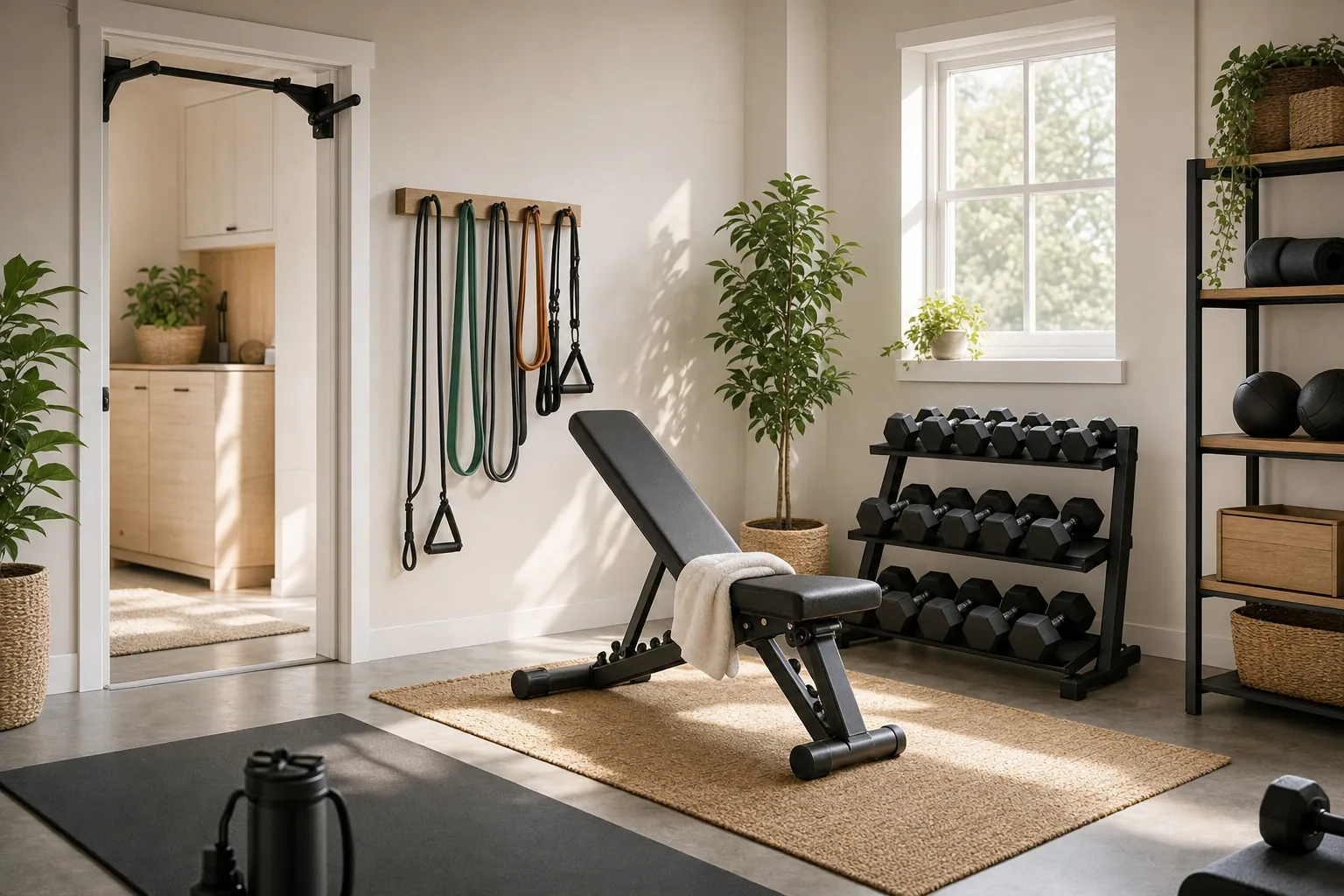
Building a home gym doesn't require a massive space or endless budget. Whether you're squeezing equipment into a spare bedroom, a garage corner, or a living room, the key is choosing versatile pieces that work for your fitness level and goals. A thoughtful home gym setup turns daily movement into something accessible, convenient, and sustainable.
Start With Your Space and Goals
Before you buy anything, measure your available area and be honest about what you'll use. A cramped corner works fine if you focus on bodyweight and resistance training, while larger spaces open up options for cardio machines or strength equipment. Think about your typical workout: do you need floor space for stretching and mat work, or will you mostly use benches and racks?
Your fitness goals shape every decision. Someone training for strength needs heavy dumbbells and a sturdy bench, while a person focused on flexibility and mobility might prioritize a yoga mat, resistance bands, and maybe a pull-up bar. Starting small and adding equipment over time is smarter than buying everything at once and watching it gather dust.
Essential Home Gym Furniture and Equipment
A solid foundation means investing in a few key pieces that serve multiple purposes. An adjustable weight bench is worth the space it takes, letting you do everything from dumbbell presses to tricep work to core exercises. Look for one that folds or stores compactly if space is tight.
Dumbbells are the backbone of most home workouts. Adjustable sets take up far less room than fixed weights, and they work for beginners and experienced lifters alike. A pair of adjustable dumbbells gives you the flexibility to progress as you get stronger.
Resistance bands are often overlooked but incredibly valuable. They're cheap, lightweight, storable in a drawer, and versatile enough for strength training, physical therapy, and mobility work. Adding booty resistance bands or other specialized sets lets you target specific muscle groups without buying more heavy equipment.
If your space allows, a doorway pull-up bar opens up upper body options without taking up floor space. An adjustable doorway pull-up bar requires no screws and works in any standard doorway, making it perfect for apartments or rental homes.
Small Home Gym Ideas for Limited Spaces
Small doesn't mean limiting. Many effective workouts happen with just a mat, dumbbells, and resistance bands. These three items occupy minimal space yet unlock hundreds of exercises.
Vertical storage keeps equipment visible and accessible. Wall-mounted racks, hooks, and shelves organize dumbbells, bands, and other gear so they don't creep into your living area. A simple pegboard or wall system lets you customize your setup as your collection grows.
Choose multipurpose furniture that doubles as storage or sits unobtrusively in a room. Benches with built-in storage, low shelving units, or even decorative storage cubes keep your space feeling intentional rather than cluttered. This approach matters if your gym shares a room with other activities.
Consider floor space carefully. A yoga mat or rubber flooring protects your floor and defines your workout zone. Rubber tiles or interlocking mats are affordable, durable, and easy to remove or rearrange when you need the space for something else.
Garage Home Gym Equipment Strategy
A garage is ideal home gym real estate because it's separate from your living space, usually has concrete flooring, and allows for noise. If you have a garage to work with, you can think bigger.
Start by zoning your space. One corner might be for free weights, another for cardio or stretching, and another for functional training. This organization makes your gym feel intentional and prevents equipment from spreading everywhere.
Flooring matters more in a garage. Rubber mats or tiles protect concrete and muffle noise, which your neighbors will appreciate. They also make the space feel more finished and gym-like, which can boost motivation.
Garages often have better opportunities for permanent fixtures. Mounting a rig, installing a heavy bag stand, or anchoring equipment to studs is easier and more stable than in a bedroom or apartment. Take advantage of this if you're planning to stay in your space long-term.
Organizing and Maintaining Your Space
A messy gym kills motivation fast. Simple organization systems keep things functional:
- Label shelves and bins so you always know where things go
- Store heavier items at accessible heights rather than on high shelves
- Keep a designated area for items in use so the rest stays tidy
- Wipe down equipment after workouts, especially if you live with others
- Take inventory every few months and move items you never use
Lighting matters too. If your space is dim, add affordable LED panels or spotlights. Good lighting makes working out safer and makes the space feel more inviting during early mornings or evenings.
Climate control is worth considering if your garage or space gets very hot, cold, or humid. A simple fan or space heater, depending on your climate, keeps you comfortable and prevents rust on equipment.
Budget-Friendly Growth Strategy
You don't need thousands of dollars to start. Buy essentials first: a bench, adjustable dumbbells, resistance bands, and a pull-up bar if space allows. These cost a fraction of what a gym membership adds up to over years.
Look for sales and discounts as you expand. Most people need only 20 percent of available equipment to reach 80 percent of their fitness goals. Avoid trendy gadgets unless they genuinely fit your routine.
Owning your home gym means you control what stays and goes. If something doesn't work after a few months, you can replace it. This trial-and-error process actually helps you build a space tailored to how you really work out, not some generic ideal.
Making Your Home Gym Sustainable
The best gym is the one you actually use. Place your equipment in a convenient, inviting location. If it's hidden in a back closet, you'll skip more workouts than if it's visible and accessible.
Plan your workouts roughly the same way you'd plan a class schedule. When your gym is at home, it's easy to skip sessions or spread them throughout the day in ways that undermine consistency. Treating your home workout time as a real appointment helps build the habit.
Personalize your space in small ways. A motivating poster, good music speakers, or natural light can transform your relationship with the space. You're not just building a functional area; you're creating an environment where movement feels good.
Creating a home gym setup that actually works means matching equipment to your space, goals, and realistic habits. Start small, choose versatile pieces, and let your setup evolve as you learn what you genuinely use. Whether you're using small home gym ideas in a bedroom or building out a garage home gym, the fundamentals stay the same: smart choices, organized storage, and consistency. Visit Mrs. Mattie to explore furniture, storage solutions, and equipment that fit your space and budget.