

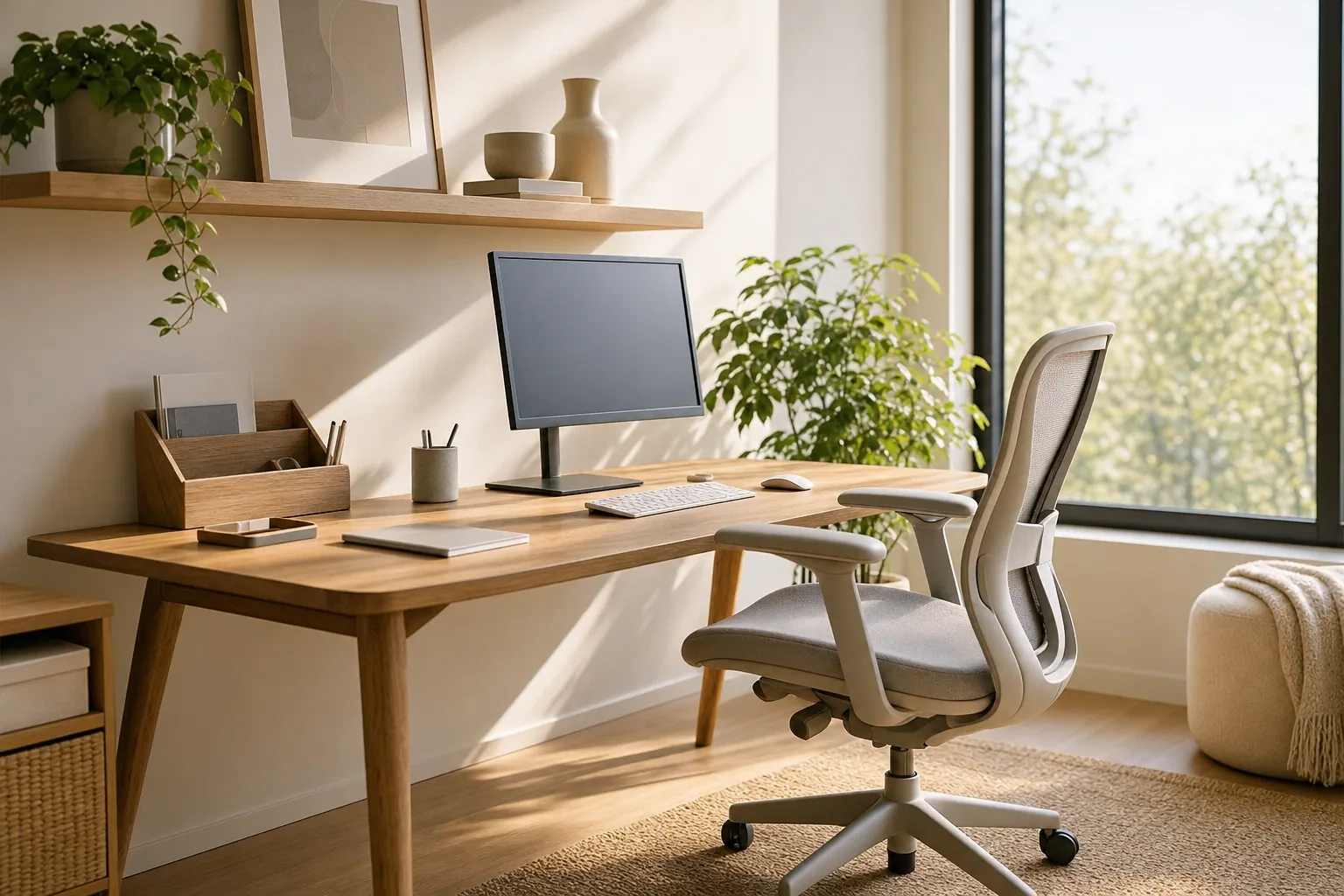
Choosing a home office desk is one of the most important decisions you'll make when setting up your workspace. Your desk isn't just furniture; it's the foundation of your productivity, comfort, and daily focus. Whether you're working from home full-time or need a dedicated space for occasional tasks, the right desk can transform how you work and feel throughout the day.
Define Your Space and Dimensions
Before you even think about style or price, measure your actual space. Understanding what fits is the first step to finding a home office desk that works.
Start by measuring the wall or corner where you want your desk to sit. Account for doors, windows, and other obstacles. Consider how much clearance you need to move your chair in and out comfortably. A small home office desk might be 40 to 48 inches wide, while larger setups can stretch to 60 inches or beyond.
Think vertically too. Check your ceiling height, especially if you plan to add shelves or a hutch above your desk. Measure the depth you can spare as well. Most desks range from 20 to 30 inches deep; shallower options save space but might feel cramped if you need multiple monitors or reference materials.
Height matters for comfort. Standard desk height is 28 to 30 inches, which works well for most people when paired with an ergonomic chair. If you're significantly taller or shorter than average, or if you plan to use a standing desk converter, adjust your expectations accordingly.
Consider Your Work Style and Workflow
Your daily tasks should guide your desk choice. Do you spend most of your time on a computer, or do you need space for paperwork, sketches, or client meetings?
If you primarily work digitally with one monitor, a simple straight desk works fine. Multiple monitors or a dual-setup? Look for a computer desk for home office that offers sufficient surface area or an L-shaped configuration. L-shaped desks give you a main work zone and a secondary surface for your printer, paperwork, or creative projects without taking up excessive floor space.
Consider storage needs too. Do you need drawers for supplies and documents, or can you rely on shelving elsewhere? Some desks come with built-in filing drawers, charging stations, and cable management features that keep your workspace organized and reduce clutter. These additions matter when you're juggling multiple tasks throughout the day.
Think about whether you host video calls or client meetings from your desk. If your background is visible on camera, choose a desk that looks polished and professional in your decor style.
Choose a Style That Matches Your Space
Your desk should feel like part of your home, not an afterthought. Style influences both aesthetics and functionality.
Modern desks offer clean lines, often in metal or glass with minimalist designs. They work well in contemporary spaces and tend to feel less visually heavy in smaller rooms. Executive or traditional desks feature solid wood, deeper finishes, and classic proportions; they convey authority and work beautifully in formal home offices.
Farmhouse or industrial styles blend wood and metal for a balanced, versatile look that suits many home decors. These designs often include thoughtful details like shelves, cable management, and storage compartments.
Match your desk to your room's color palette and overall aesthetic. A bright, airy room pairs well with light woods or white finishes. Darker, more formal spaces benefit from richer wood tones or espresso finishes.
Evaluate Material Quality and Durability
A quality desk is an investment that should last years, not months.
Solid wood desks are durable and age beautifully, though they cost more and require occasional maintenance. Engineered wood or laminate options offer affordability and style but may not withstand heavy daily use as well. Metal frames paired with wood or glass surfaces provide strength and modern appeal.
Check the construction. Are joints reinforced with brackets or just screws? Are drawers mounted on smooth slides? Does the surface feel stable when you lean on it? These details affect longevity.
Consider the finish too. A sealed or lacquered surface resists scratches and stains better than raw wood. Some desks include protective top layers that handle spills and daily wear more gracefully.
Factor in Storage and Organization
Clutter kills productivity. Your desk should help you stay organized, not add to the mess.
Drawers are invaluable for keeping supplies within arm's reach. Multiple small drawers work better than one large drawer if you need to organize pens, sticky notes, charging cables, and paperwork separately. Some desks include locking drawers for documents or personal items.
Open shelving, cubbies, or hutches above your desk keep frequently used items visible and accessible. Just remember that open storage can make a room feel busier, so reserve it for items you actually use daily.
Built-in cable management features and power outlets save time and create a cleaner look. If your desk doesn't have these, plan to add them with cable clips and power strips.
Floating shelves or wall-mounted storage near your desk extend your organization options without consuming desktop surface area.
Test Ergonomics and Comfort
You'll spend hours at your desk. Comfort and proper ergonomics prevent pain, fatigue, and long-term injury.
When you sit in your chair with your feet flat on the floor, your elbows should form roughly a 90-degree angle when resting on the desk. Your monitor should be at eye level, about an arm's length away. These alignments reduce strain on your neck, shoulders, and wrists.
The desk height should work with your chair of choice. If you already have a chair you love, measure its height and make sure your desk height is compatible. If you're shopping for both, choose the chair first, then find a desk that complements its ergonomics.
Consider a desk with adjustable height if you plan to alternate between sitting and standing. This flexibility reduces the fatigue that comes with staying in one position all day.
Test the desk surface if possible. Is it large enough for your monitor, keyboard, and other essentials without feeling cramped? Can you comfortably reach items in drawers and shelves? These practical details matter more than you might think.
Budget for the Right Value
Home office desks range from a few hundred dollars to several thousand. Your budget should reflect both your needs and how long you plan to use the desk.
If you're just starting a home office or testing a new setup, a mid-range option offers good quality without overcommitting. As your work grows more established or your needs become clearer, upgrading to a premium desk with better materials and features often makes sense.
Look for value, not just low price. A slightly more expensive desk with solid construction, good storage, and ergonomic design will serve you better over time than a cheap alternative that feels wobbly or offers no organization.
Flash sales and discounts can make premium desks more accessible. Timing your purchase around promotional periods stretches your budget further.
Bring It All Together
Choosing the right home office desk means balancing space, style, functionality, and comfort. Start with honest measurements, be clear about your workflow, and prioritize quality and ergonomics. The best desk for you is one that fits your room, supports your work, and feels like a natural part of your home. When you get this foundation right, everything else in your home office flows more easily, and your daily productivity follows.