

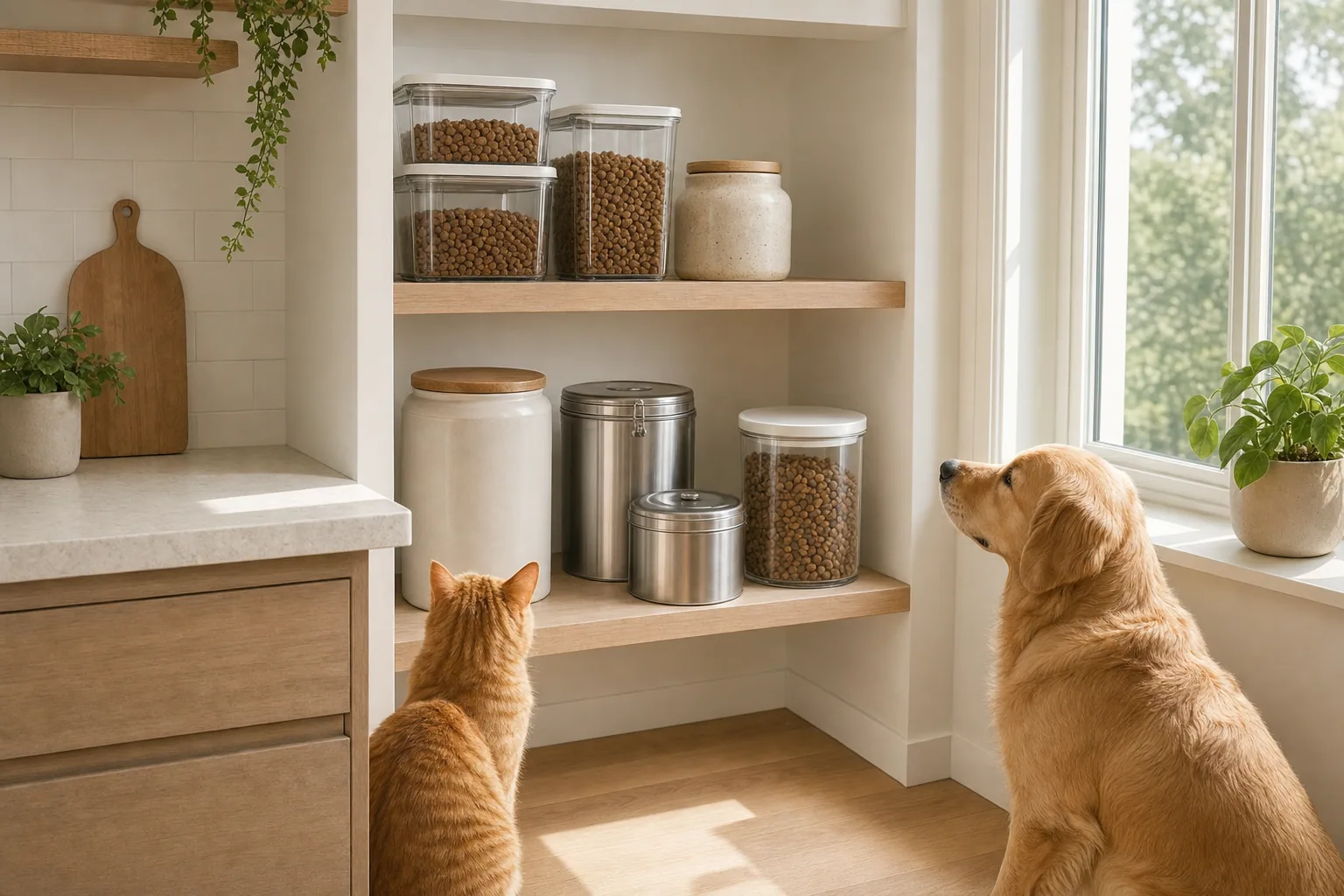
Your pet's food deserves the same care you give to the rest of your household. A good pet food storage container keeps kibble fresh, pests out, and your kitchen tidy. Whether you have dogs, cats, or both, choosing the right storage solution makes feeding time easier and helps you save money by preserving food quality.
Why Pet Food Storage Matters
Buying pet food in bulk saves money, but only if the food stays fresh. Once you open a bag, exposure to air, moisture, and pests can spoil kibble within weeks. Proper storage extends shelf life, locks in nutrition, and keeps insects away from your pantry.
A dedicated pet food storage container also protects your home. Loose bags tear easily, scatter kibble across floors, and attract unwanted visitors. An organized system means less mess, easier cleanup, and a cleaner living space. For busy households, this matters more than you might think.
Size and Capacity Considerations
The first step in selecting a pet food storage container is choosing the right size. Think about how much food you buy at once and how often you shop.
If you purchase a 30-pound bag of dog food every month, you need a container that holds at least that amount. A container that's too small forces you to store extra bags in other places, defeating the purpose. A container that's too large wastes space if you have a small pet or prefer buying smaller quantities.
Consider your pantry or storage area too. Measure the space where you plan to keep the container. A container that won't fit where you want it is impractical, no matter how well it works otherwise. Think vertically if you're short on floor space. Some people stack multiple smaller containers instead of buying one large one.
For multiple pets, you might want separate containers for each animal's food. This prevents mix-ups and makes it easy to track when you're running low on a specific diet.
Material Options for Pet Food Containers
Pet food storage containers come in several materials, each with pros and cons.
Plastic containers are affordable and lightweight. They're easy to clean and often come with measurement markings on the side. Clear plastic lets you see how much food remains without opening the lid. However, plastic can crack over time and may absorb odors. Lower-quality plastic can warp in humid environments.
Metal containers offer excellent durability and pest protection. Airtight metal bins create a seal that keeps moisture and insects completely out. They look sleek in modern kitchens and last for years. The downside is weight and cost. Metal containers are heavier, harder to see through, and often pricier than plastic alternatives.
Stainless steel is a premium choice that resists odors, rust, and staining. It's hygienic and works well in any kitchen style. The trade-off is higher price and the same visibility issue as other metal options.
Ceramic containers add aesthetic appeal and work in any home design. They're durable and generally keep food fresh. Ceramic is heavier than plastic and more fragile. It's best for decorative storage in accessible areas, not deep pantries where it might get bumped.
Seal Quality and Airtight Features
An airtight seal is the most important feature in any pet food storage container. Without it, moisture seeps in, kibble goes stale, and nutritional value drops.
Look for containers with rubber gaskets or locking lids that create a tight seal. Test the seal yourself before buying if possible. Press the lid down firmly. You should feel resistance, and the lid should sit snugly without gaps.
Some containers have flip-top lids or sliding mechanisms. While convenient, these can fail over time. Latching lids and twist-lock designs tend to hold their seal longer. If you live in a humid climate, this feature becomes even more critical.
Ask yourself: does the lid stay secure if the container tips? A good seal should hold even if the container is jostled or turned on its side.
Design Features That Make Feeding Easier
Beyond storage, think about how the container works in daily life.
Pouring spouts make serving food faster and reduce mess. A wide mouth opening also makes filling and cleaning simpler. Some people prefer containers with measurement markings, so they know exactly how much food they're scooping for each meal.
Wheels or handles matter if you plan to move the container often. A 30-pound bin becomes heavy quickly. Containers with sturdy handles or rolling bases are more practical for larger households.
Stackability helps if storage space is tight or you have multiple pets. Flat-topped containers stack more efficiently than rounded designs.
Dishwasher-safe parts save time on cleaning. Even if the container body isn't dishwasher-safe, removable lids and gaskets that go in the wash are a bonus.
Some people prefer see-through materials so they can monitor food levels at a glance. Others like opaque containers to block light and preserve freshness better. Think about your habits and what will actually get used.
Pest Prevention and Food Safety
Airtight containers are your first line of defense against rodents, insects, and pantry pests. Sealed bins prevent access better than open bags or flimsy storage.
If you live in an area with serious pest problems, avoid containers with rubber seals that deteriorate over time. Check the gasket regularly and replace it if it cracks or hardens. Even a tiny gap invites trouble.
Keep the storage area cool and dry. Heat and humidity degrade kibble faster and create conditions pests enjoy. A dark closet or pantry works better than near a sunny window or above a stove.
Wash containers between refills, not just when they're empty. Food residue attracts pests and can harbor bacteria. A clean container extends the life of fresh food and keeps your home safer.
Making Your Final Choice
The best pet food storage container balances price, durability, and function for your lifestyle. Start by measuring your space and figuring out how much food you need to store. Then prioritize based on what matters most: budget, appearance, durability, or ease of use.
Read reviews from other pet owners. Real experiences with durability, seal quality, and day-to-day usability are invaluable. Pay special attention to comments about how the seal holds up after months of use.
If you have room in your budget, invest in a container from a trusted brand known for airtight seals and quality construction. A reliable container pays for itself by keeping food fresh longer and protecting your home from pests.
Chosen wisely, a pet food storage container becomes part of your everyday routine. It keeps your pet healthy, your kitchen organized, and your storage areas protected. Whether you go with practical plastic, durable metal, or beautiful ceramic, you're making a choice that benefits both your pet and your home. Start shopping with a clear sense of what you need, and you'll find a container that works perfectly for your household.