

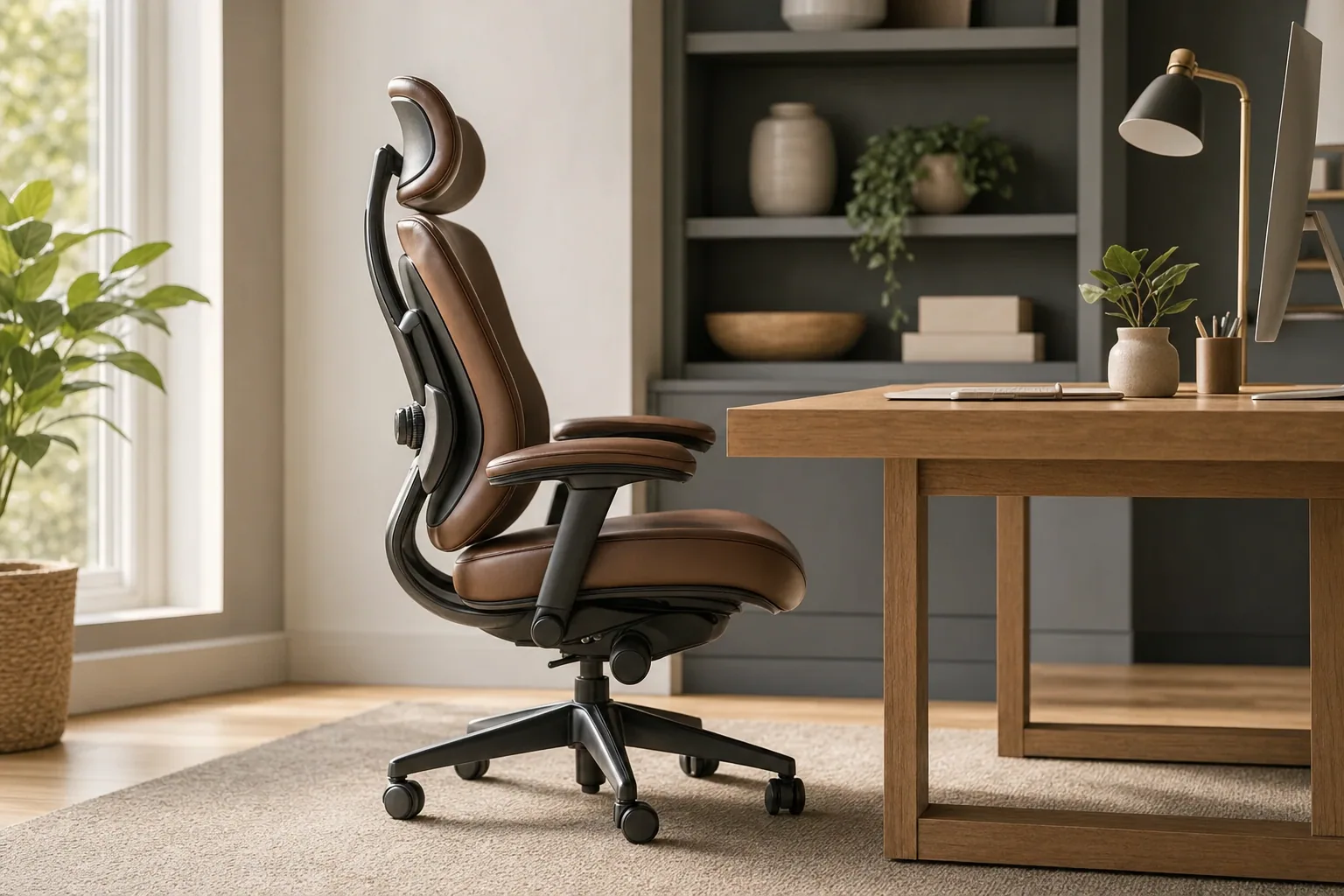
Your desk chair is not just a place to sit. It's the foundation of your comfort during work hours, and it directly affects your posture, back health, and productivity. Choosing the right desk chair for posture support can mean the difference between ending your day pain-free and struggling with back tension.
If you spend hours at a computer or desk each day, an office chair ergonomic design becomes essential. Yet many people settle for whatever is cheapest or most readily available, only to regret the choice after weeks of discomfort. The good news is that finding a supportive executive office chair doesn't have to be complicated.
What Makes a Chair Support Good Posture
Proper posture starts with how your body sits. When you're positioned correctly, your spine maintains its natural S-curve, your shoulders relax, and your legs form a 90-degree angle at the knees. A chair that forces you to slouch or reach awkwardly will undermine these benefits before you even realize it.
The best office chairs comfort comes from a combination of features designed to keep your body in alignment. Look for a chair with a contoured backrest that mirrors the natural curve of your spine. The lumbar support should fit snugly into the lower back curve, preventing that common slouch that leads to strain.
Your chair's height matters too. When seated, your feet should rest flat on the floor with your thighs parallel to it. Your desk surface should align with your elbows at rest, so your arms don't strain when typing or writing.
Lumbar Support: The Foundation of Spinal Health
The lumbar region (lower back) bears most of your body weight when sitting. Without proper support there, your muscles work overtime to compensate, leading to fatigue and pain. A quality executive office chair includes built-in lumbar support or an adjustable lumbar system.
Some chairs offer fixed lumbar curves, while others let you adjust the support height and depth to match your unique spine shape. If you have any existing lower back issues, adjustable lumbar support is worth the investment. You can fine-tune it as your needs change throughout the day.
Test this feature by sitting in the chair and pressing your lower back gently against the support. It should feel like a gentle push back, not a hard jab. The support should sit at the natural curve of your lower spine, typically a few inches above your belt line.
Armrest Height and Adjustability
Arm support prevents neck and shoulder strain, but only when positioned correctly. Your armrests should be high enough that your elbows rest comfortably when your arms are bent at 90 degrees. If they're too low, you'll lean to one side or hunch your shoulders. Too high, and you'll struggle to get under your desk.
Many desk chairs offer height-adjustable armrests, which is a major advantage. Some also swivel or pivot, giving you flexibility as you move around your workspace. If you work at different heights or move between tasks frequently, this flexibility matters.
If your current chair lacks proper armrest support, adding adjustable armrests can be a cost-effective upgrade before replacing the entire chair.
Seat Height and Depth Adjustments
Your chair height must be easily adjustable to work with different desks or accommodate different clothing. Pneumatic height adjustment using a gas cylinder is the standard, and it should raise and lower your seat smoothly without jerking.
Seat depth is equally important. Your seat should support your thighs without pressing into the back of your knees. When sitting back fully, there should be about 2 to 3 inches of space between the edge of the seat and the back of your knees. A seat that's too deep will push you forward, making you lose backrest contact. One that's too shallow won't support your legs properly.
Some premium chairs offer adjustable seat depth or tilt mechanisms that let you recline slightly, distributing pressure differently throughout your body.
Material and Padding Considerations
Comfort depends partly on what the chair is made of. Leather feels premium and wipes clean easily, but it can feel cold and doesn't breathe as well as fabric. High-quality mesh or breathable upholstery keeps you cooler during long work sessions, making it ideal if your office tends to be warm.
Padding thickness matters too. Too little padding and the frame pokes through after a few hours. Too much and the chair feels mushy, offering less actual support. Medium-density foam tends to hit the sweet spot: responsive enough to support your body while staying comfortable.
Look for padding that holds its shape over time. Cheap foam breaks down after a few months, leaving you sitting on a flattened surface that no longer supports your posture.
Budget-Friendly vs. Premium Options
You don't need to spend thousands on a desk chair to get good posture support. However, there's a real difference between budget options and mid-range to premium chairs. Budget chairs often lack proper lumbar support or have non-adjustable features that limit customization.
Mid-range chairs typically offer basic adjustability, decent padding, and reasonable lumbar support. Premium options like a luxury leather executive office chair add advanced features: fully adjustable armrests, mesh backs, tilt-lock mechanisms, and high-end materials.
Consider your budget alongside how many hours you sit daily. If you work from home full-time, investing in a quality chair is one of the best decisions you can make for long-term comfort and health. If you're in the office just a few hours weekly, a more basic option may work fine.
Finding Your Perfect Chair
The best approach is to test chairs before buying. Sit in each candidate for at least 5 to 10 minutes, if possible. Adjust the height and armrests to your proportions. Does your lower back feel supported? Can you rest your feet flat on the floor? Does the seat depth match your leg length?
If shopping online, look for detailed product descriptions and customer reviews mentioning comfort and posture support. Pay attention to feedback from people with similar body types or work habits. A chair that works beautifully for someone else might not suit your needs.
Remember that even the best chair won't fix poor habits. Getting up to stretch every hour, maintaining awareness of your posture, and adjusting your setup as needed all contribute to spinal health. The chair is just one piece of a larger comfort puzzle.
Choosing a desk chair for posture support is an investment in your well-being. Take time to understand what your body needs, test different options, and don't settle for discomfort. Whether you need a simple, supportive chair or a premium executive office chair with all the bells and whistles, prioritize lumbar support, adjustability, and proper alignment. Your back will thank you.