

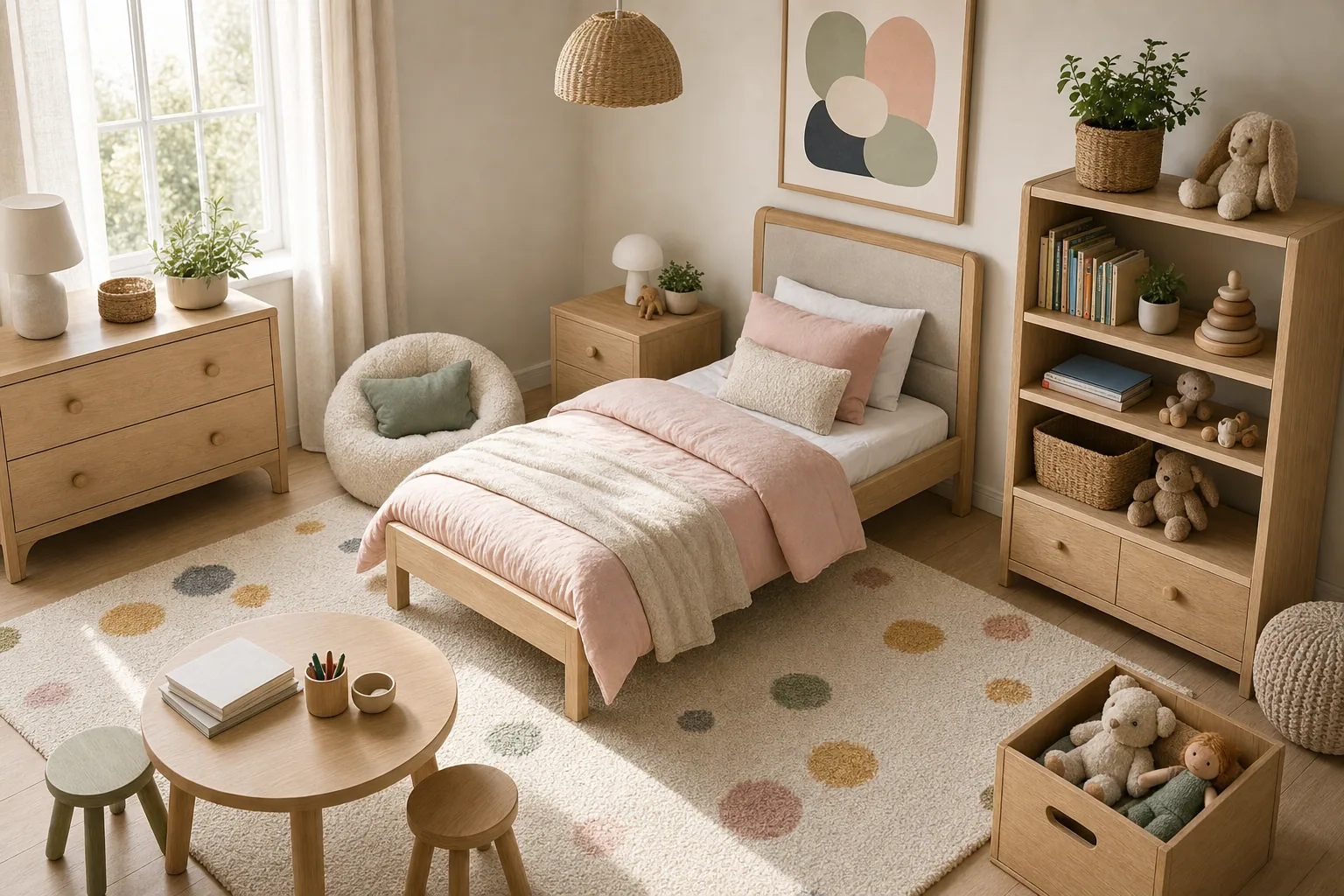
Best Kids Bedroom Furniture Layouts for Growing Rooms
Designing a kids bedroom is different from furnishing adult spaces. Your child's room needs to grow with them, shift as their interests change, and make room for both sleep and play. The right furniture layout transforms a bedroom from a cramped afterthought into a functional, inspiring space where kids actually want to spend time.
Mrs. Mattie carries a curated selection of kids bedroom furniture and storage solutions that work within different room sizes and configurations. Whether you're starting from scratch or rearranging what you already have, smart layout choices can unlock potential you didn't know was there.
Create Zones Within the Space
The most effective kids bedroom layouts divide the room into distinct zones: sleep, play, and storage. Even in a modest-sized room, these zones help your child mentally separate activities and keep the space from feeling chaotic.
Start with the bed as an anchor. If the room is small, place the bed against the longest wall. This opens up the rest of the space for a play area. If you have a larger room, consider positioning the bed perpendicular to a wall, which can create a cozy sleeping corner while leaving the center of the room open.
Next, designate a play zone away from the bed. Kids who nap or need quiet downtime sleep better when their play space is visually separated. Even a simple area rug can mark where toys belong. Pair this with proper storage, like a toy organizer or low bookshelf, so cleanup happens in one spot.
The storage zone should be easily accessible. Children are more likely to put things away if they can reach shelves and drawers without adult help. A low dresser or bookcase positioned along another wall keeps clothes and books organized without eating up floor space.
Choose Adaptable Furniture Pieces
Kids grow quickly, and their bedroom needs shift just as fast. Furniture that can adjust or transition saves money and keeps your layout flexible over the years.
Low, open shelving works across age groups. A toddler can reach toys on the bottom shelf, while a school-age child uses middle shelves for books and collections. A teen might repurpose the same unit for storage and display. Look for pieces without backs, which make rooms feel more spacious and let light flow through.
Dressers are another piece that spans years. A wooden dresser with smooth drawers accommodates clothing for any age, and you can swap out the decor on top as your child's interests evolve. Some families choose dressers with built-in storage baskets or multiple drawer configurations to maximize utility.
For beds, consider a full-size frame rather than a twin if your budget allows. Kids grow into a full bed by age eight or nine, so you avoid the expense of replacing a twin frame in just a few years. Many kids bedroom furniture sets include coordinated bed frames and storage units that tie the room together visually.
Position Furniture for Safety and Sightlines
Safety matters more than style in a kids room. Secure tall furniture like bookcases to the wall using straps or brackets. A curious toddler can tip an unsecured bookcase, and older kids might climb on furniture during play.
Arrange pieces so you can see the majority of the room from the doorway. This matters for younger children especially. If a dresser or large toy bin blocks your view of the play area, consider moving it to a different wall.
Keep pathways clear between zones. Your child should be able to move from bed to play area to the door without navigating around obstacles. This is particularly important at night when sleepy kids stumble to the bathroom or when you need to move quickly in an emergency.
Avoid placing furniture in front of windows unless the room is very dark. Natural light makes a kids bedroom feel larger and happier. Window-side placement also blocks fresh air circulation and can trap heat.
Maximize Vertical Space
Kids bedrooms often come with limited square footage. When floor space is tight, look up. Vertical storage is a game-changer in small rooms.
Wall-mounted shelves above a dresser, desk, or seating area multiply your storage without adding bulk. A tall bookcase in a corner takes up minimal floor space while providing substantial storage. Some families install floating shelves above the bed (safely secured, of course) to display books or soft collections without using a nightstand.
Lofted beds are another option if your ceilings are high enough. Sleeping up creates an entire zone underneath for a desk, reading nook, or toy storage. This layout works best for kids old enough to safely climb and descend a ladder, usually around age six or seven.
Don't forget wall space for organizers and hooks. Pegboards, hanging organizers, and wall pockets keep small items, art supplies, and accessories off the floor and within reach.
Tailor the Layout to Your Child's Age and Interests
A toddler's room needs safe, accessible storage and plenty of open floor for play. Keep furniture minimal and make sure nothing has sharp corners or tipping hazards. Focus on one low dresser, a crib or bed, and a toy organizer.
As kids enter elementary school, add a small desk or art table if space allows. This gives them a dedicated spot for homework and creative projects. Pair it with wall-mounted storage for art supplies so the desk doesn't become a clutter magnet.
Teens appreciate a bedroom that doubles as a retreat and study space. Include a proper desk with task lighting, a comfortable chair, and storage for school supplies. Lofted or elevated beds free up floor space for a seating area or workspace.
Regardless of age, involve your child in layout decisions when possible. Kids who help choose how their room is arranged take more ownership of keeping it organized.
Storage Solutions That Grow with Your Child
Open bins, baskets, and labeled organizers work for any age when you label them clearly. Use words and pictures for younger kids; words alone suffice for older children.
Drawer dividers prevent dresser drawers from becoming black holes. Small dividers for socks and underwear keep categories separate and make getting dressed faster. Some families use the same divider system across multiple pieces of furniture for a cohesive, organized look.
Multi-functional pieces serve double or triple duty. A storage bench at the foot of the bed holds blankets and seasonal clothes while providing seating. A toy chest with a hinged lid can eventually store off-season clothing for a teen. These hybrid pieces reduce the number of separate furniture items you need while maximizing utility.
Bring It Together
The best kids bedroom furniture layout balances openness, safety, and function. Start by creating distinct zones, choose adaptable pieces that grow with your child, and keep pathways clear. Use vertical space to multiply storage without overwhelming the room, and let your child's age and personality guide your choices.
Mrs. Mattie offers a range of kids bedroom furniture and accessories to help you create a space your child loves. Whether you're working with a tiny bedroom or have room to spread out, thoughtful arrangement transforms the space into somewhere your kid actually wants to be.