

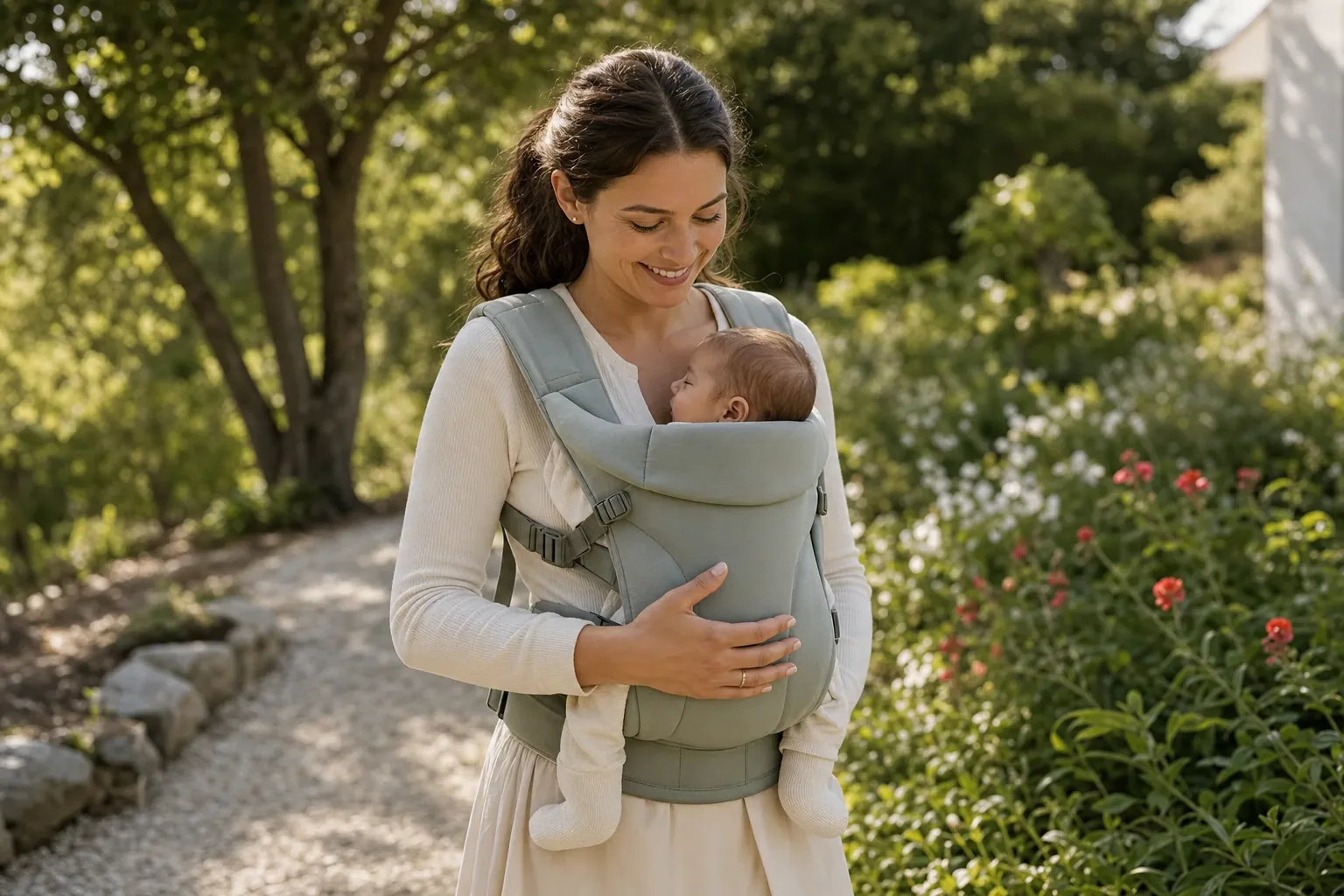
A baby carrier transforms how you move through your day. Instead of juggling a stroller or keeping one hand occupied, you get to hold your baby close while keeping both hands free. If you're a new parent trying to figure out which baby carrier works best for your lifestyle, this guide walks you through what matters most and how to choose one that fits your needs.
Why a Baby Carrier Matters for New Parents
When you bring a newborn home, life becomes a careful balance between meeting your baby's needs and managing everything else. A baby carrier bridges that gap. Your baby gets the security of being held, you get mobility and both hands available, and you can tackle daily tasks, run errands, or simply take a quiet walk without feeling tethered to a stroller.
Babies also benefit from the closeness. Being held promotes bonding, helps regulate their body temperature, and often soothes fussy moments. For parents, carriers reduce the physical strain of holding a baby for hours at a time and give you the freedom to be hands-on while staying flexible.
Understanding Different Carrier Types
Not all baby carriers work the same way. Understanding your options helps you pick one that matches how you'll actually use it.
Soft Structured Carriers are the most popular choice. They feature padded shoulder straps, a waist belt, and a panel that holds your baby snugly against your chest or back. They're intuitive to put on, distribute weight evenly, and work from newborn through toddler years if you buy the right one. Brands often offer models with adjustable panels to grow with your child.
Wraps and Slings use fabric to create a secure pocket for your baby. They offer a more natural, close-to-body feel and are often the lightest option. They do have a steeper learning curve and require you to practice the wrapping technique before you feel fully confident.
Buckle Carriers are simpler than soft structured carriers but less adjustable. They're lightweight and great for short outings but may not distribute weight as comfortably for longer periods.
Ring Slings are single-shoulder carriers that use a metal ring to secure fabric. They're compact and portable but place more weight on one side of your body.
Key Features to Look For
When comparing baby carriers, focus on these essentials.
Ergonomic Support keeps both you and your baby comfortable. Look for carriers that promote a healthy hip position for your baby and provide adequate lower back and lumbar support for you. Poor support can lead to back pain during those long days of wearing your baby.
Adjustability matters because babies grow and bodies differ. Carriers with adjustable straps, panels, and waist belts let you fine-tune the fit. This is especially important if both parents will use the same carrier.
Weight Distribution determines how tired you'll feel after wearing the carrier. Carriers that spread the load across your shoulders, hips, and back prevent strain. Shoulder padding and a sturdy waist belt are signs of good design.
Ease of Use affects how often you'll actually reach for the carrier. If putting it on feels like a puzzle, you'll be less likely to use it when you need it most. Soft structured carriers usually win here because they fasten with buckles rather than requiring fabric wrapping.
Breathability keeps your baby cool during warmer months. Mesh panels or natural fabric blends allow air circulation without overheating your little one.
Weight Limit tells you how long you can use the carrier. Some carriers work from birth through toddlerhood, while others have narrower age ranges. Check the manufacturer's guidelines to make sure the carrier grows with your child.
How to Choose the Right Carrier for Your Lifestyle
The best carrier depends on your daily routine and preferences.
If you're always on the go, a soft structured carrier offers speed and convenience. Put it on in seconds, buckle your baby in, and you're moving. If you drive frequently, a lightweight carrier that doesn't take up much space in your car appeals to you.
If you value closeness and prefer a minimalist approach, a wrap or sling gives you that intimate, skin-to-skin feel. These work beautifully for short trips or around-home use.
If you're managing multiple kids or juggling errands, having both hands free is non-negotiable. Any structured carrier does this, but one with excellent back support prevents pain from carrying your baby plus groceries or a toddler's hand.
Consider your climate too. In warm weather, breathable materials keep your baby from getting too hot. In cooler seasons, you might layer the carrier over a winter coat.
Tips for Using Your Baby Carrier Safely
A quality carrier is only safe when used correctly.
- Follow the manufacturer's weight and height limits without exception
- Always secure all buckles and straps before moving
- Position your baby's face where you can see it and they can breathe freely
- Support your baby's head for newborns and younger infants
- Keep your baby's chin off their chest to maintain an open airway
- Avoid overheating by checking your baby's neck and back during wear
- Take breaks if you experience back or neck pain
Making Your Choice
Test out a few carriers if possible. Many parenting groups, libraries, or baby stores let you try carriers before buying. What works for one parent might not suit another, and what feels great at two weeks might feel different at three months.
Invest in quality. A well-made carrier supports proper development for your baby and saves your back. It's one of those purchases that pays dividends every single day.
Remember that you don't need every type of carrier. Most families do great with one primary carrier that fits their lifestyle and a lightweight backup for travel or quick outings. The right baby carrier is the one you'll actually use, the one that keeps you and your baby comfortable, and the one that gives you the freedom to keep living your life while keeping your baby close.
If you're setting up your nursery or preparing for a new arrival, Mrs. Mattie offers a full range of baby essentials and newborn gear to help you feel ready. From practical items to nursery furniture, finding everything you need in one place makes preparation easier.