

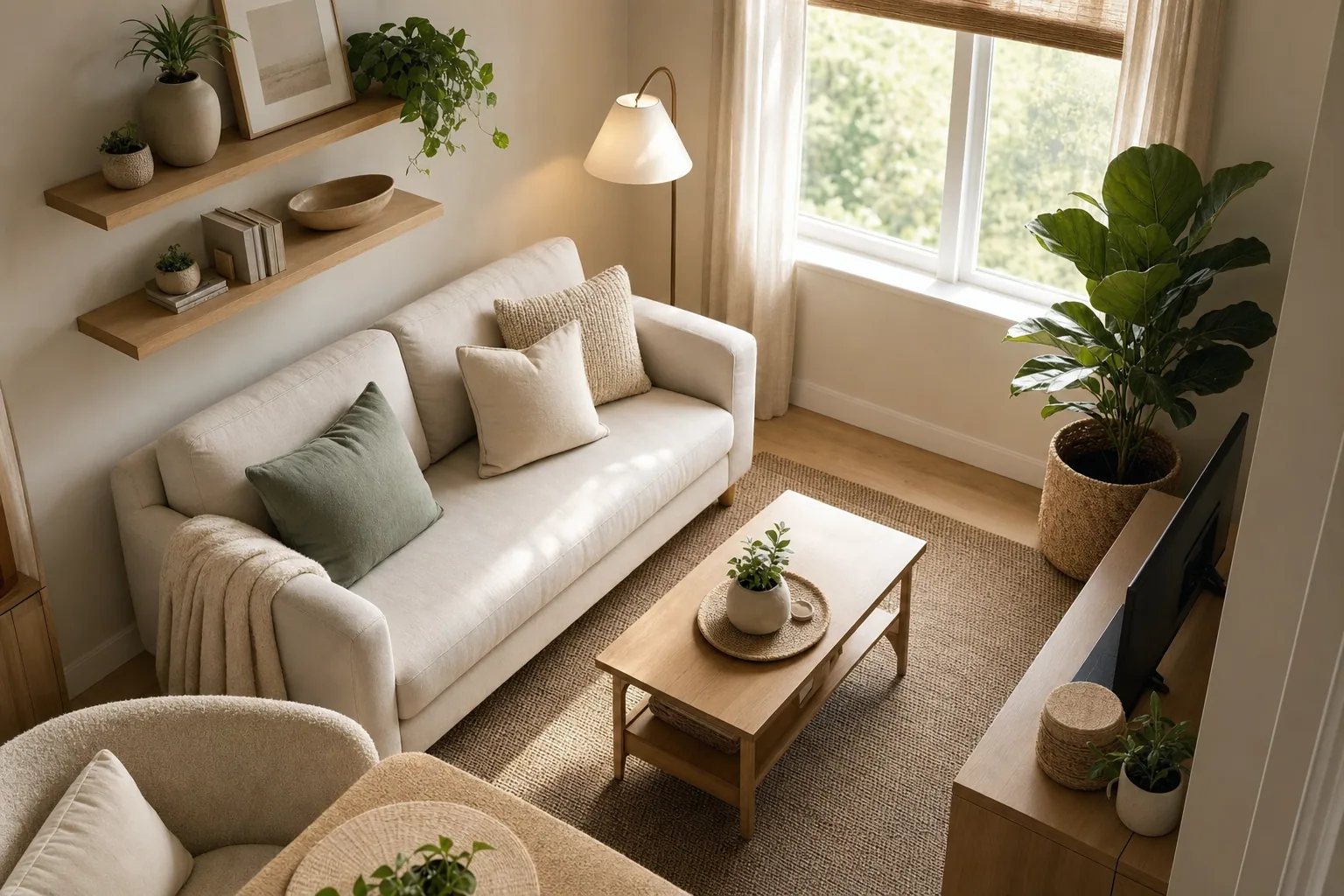
A small living room doesn't have to feel cramped. The secret is not about having less furniture, it's about choosing the right pieces and arranging them strategically. When you understand how to arrange furniture in a small living room, you transform the space into something that feels open, functional, and intentional.
Start With a Clear Floor Plan
Before you move anything, measure your room and sketch a simple floor plan. Note where windows, doors, and electrical outlets are located. This prevents you from discovering mid-arrangement that your sofa blocks the only light source or leaves a doorway impassable.
When measuring, include the dimensions of each furniture piece you want to keep. Many people arrange furniture around what they already own without checking whether it actually fits the room's proportions. A piece that looked fine in a showroom can overwhelm a small space.
Test different configurations on paper first. You might discover that rotating your furniture 90 degrees opens up the whole room, or that swapping two pieces creates better traffic flow. This costs nothing and saves hours of physical rearranging.
Anchor Your Layout Around a Focal Point
Every small living room needs a visual anchor. This is typically a fireplace, a window with a view, or a TV. Arrange your seating to face this focal point rather than floating furniture in the middle of the room.
If your room doesn't have a natural focal point, create one. A well-placed mirror or a gallery wall can serve this purpose. When furniture has a clear orientation, the room feels organized rather than random, which makes it feel larger.
Keep your primary seating close enough to face the focal point but far enough away that you're not cramped. In a small living room, this balance is critical. You want people to sit comfortably without feeling like they're right on top of each other.
Choose Multifunctional Pieces
In small spaces, every item should earn its place by doing more than one job. A coffee table with a storage shelf underneath holds remotes, magazines, and blankets while taking up no extra footprint. An ottoman can be a footrest, additional seating, or a place to set a tray when guests visit.
Look for pieces that stack, fold, or have dual purposes. A bookshelf against the wall serves storage while adding vertical visual interest. Nesting tables give you surface area when needed but take up less room than a single large table. Even a sideboard with storage keeps items off the floor and consolidates clutter.
When you select multifunctional pieces, you reduce the number of separate items in the room, which automatically makes it feel less crowded.
Go Vertical to Maximize Space
Small rooms need to make friends with height. Instead of spreading furniture across the floor, pull the eye upward with tall bookcases, floating shelves, or wall-mounted storage. This draws attention to the vertical dimension of your room rather than emphasizing its limited floor space.
Floating shelves above a sofa or along a side wall don't intrude on your walking space the way floor furniture does. They're also perfect for displaying items that make the room feel personal without adding clutter. Plants, books, and small decorative objects break up wall space while keeping the floor clear.
Wall-mounted shelving is especially useful in small living rooms because it adds storage and visual interest without consuming precious square footage.
Use Mirrors and Light to Create Openness
Mirrors are the secret weapon of small-space design. A well-placed mirror reflects light and creates the optical illusion of depth. Position mirrors across from windows so they bounce natural light around the room. This makes even a naturally dim corner feel brighter and more open.
Pair mirrors with smart lighting choices. Overhead fixtures can make a room feel smaller and more enclosed. Instead, use table lamps, floor lamps, and wall sconces to create layers of light. This approach feels cozier and makes the room feel less like a shoebox.
Keep your color palette light, especially on walls and larger furniture pieces. Whites, creams, soft grays, and muted tones reflect light better than dark colors, which absorb it and make spaces feel smaller. You can add richness and personality through pillows, rugs, and accessories without overwhelming the room.
Arrange Traffic Patterns Thoughtfully
Consider how people move through your living room. Furniture shouldn't block the natural path from the entry to other rooms. If your layout forces someone to navigate an obstacle course, it will feel cramped no matter how carefully you've chosen your pieces.
Leave at least 18 inches of walking space between furniture and walls. This might sound tight, but it's the minimum needed to make a space feel navigable. If you have more room to spare, use it. Rooms with breathing room feel larger.
Arrange seating so that people can have conversations without craning their necks. In a small living room, this often means an L-shaped sofa with a chair angled toward it, or two sofas facing each other with a coffee table in between. The key is sightlines, not symmetry.
Small Furniture Layout Tips That Actually Work
Here are practical moves that make a real difference:
- Push furniture toward the walls rather than floating it in the center. This keeps the middle of the room open and creates a sense of spaciousness.
- Avoid a wall-to-wall sectional if your room is truly tiny. An L-shaped sofa takes up less visual weight than a massive sectional and gives you flexibility.
- Place a rug under your seating area to anchor the space and define it as a distinct zone. A rug makes scattered furniture feel intentional.
- Keep side tables slim and simple. Bulky end tables eat up precious space. Look for narrow tables or nesting options that tuck away when not needed.
- Raise furniture off the ground slightly. Sofas and tables with exposed legs feel less heavy than pieces that sit flush to the floor.
- Group storage pieces together rather than spreading them around. One wall of cabinets and shelves feels more organized than random storage scattered throughout.
Avoid These Common Small-Room Mistakes
Don't buy furniture based on how it looks in isolation. A beautiful sofa in a store showroom might be too large for your room. Always measure and visualize in context.
Avoid blocking windows with large pieces. Windows are your source of light and perceived openness. Maximize what they offer by keeping them clear.
Don't overcrowd the room with accessories, even if you love them. In a small space, less is more. Every decorative item takes up visual space, so choose pieces that matter and display them thoughtfully.
Resist the urge to cram in "just one more" piece of furniture. If something doesn't fit naturally, it will make the room feel cluttered no matter how useful it might be.
Creating Your Ideal Layout
Small living room furniture arrangement is about making intentional choices. Start by understanding your space, then select pieces that serve multiple purposes, and arrange them so traffic flows naturally and your eyes move upward rather than getting stuck on the crowded floor.
The goal isn't to fit more into your small living room, it's to make what you have feel purposeful and calm. When furniture is arranged well, the room feels peaceful rather than cramped. When you need to refresh your space with new pieces that work hard and look good, Mrs. Mattie offers everything from compact seating solutions to smart storage options and lighting that transforms your room. Visit the store to explore multifunctional furniture designed for real-life living in smaller spaces.