

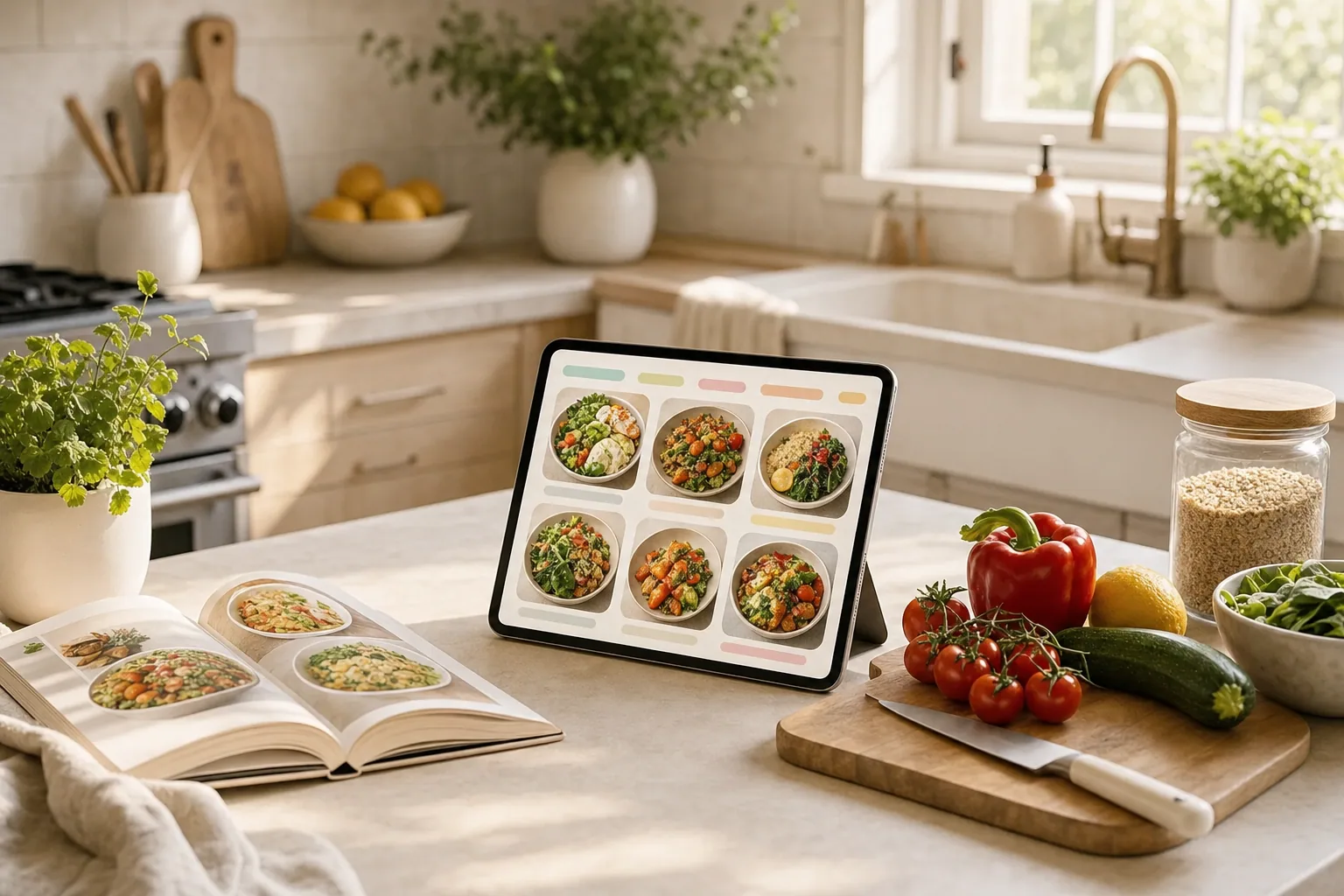
How AI Transforms Everyday Meal Planning
Meal planning used to feel like a weekly chore: opening the fridge, scrolling through old recipes, making lists, then realizing you forgot half the ingredients at the store. AI tools for meal planning have changed that entirely. Instead of starting from scratch, you now describe what your family likes, dietary needs, or time constraints, and an AI system generates a complete week of meals tailored to your reality.
Unlike generic meal planning apps, AI-powered solutions learn from your preferences and household patterns. They can suggest recipes based on ingredients you already have, account for allergies and dietary restrictions, and even sync with your grocery budget. The result is less decision fatigue and more calm weeknights.
The Real Benefits of AI-Assisted Meal Planning
When you use a meal planning app powered by AI, several practical advantages emerge immediately.
Time savings are the most obvious. Instead of spending an hour on Sunday planning, you spend ten minutes describing your preferences to an AI tool. It generates options, you approve them, and your week is set. No more last-minute scrambling or takeout because you forgot to prep.
Cost control comes next. AI meal planning tools can match recipes to your budget and flag price changes at your local grocery store. By planning around sales and seasonal produce, families often cut their grocery bills by 15 to 25 percent without sacrificing quality.
Reduced food waste happens naturally when meals are planned. You buy what you need, recipes use overlapping ingredients, and nothing sits in the back of your fridge until it spoils.
Stress reduction may be the biggest win. Knowing what you are making tonight, tomorrow, and all week removes one major source of daily decision-making. For busy parents and homeowners juggling a hundred responsibilities, that clarity is invaluable.
Weekly Meal Planning Ideas That Actually Work
AI tools excel at creating meal planning for families because they balance nutrition, taste, and reality.
Here's what works well in practice:
- Theme nights - AI can assign themes (taco Tuesday, pasta Wednesday) and suggest variations so you have structure but not boredom.
- Ingredient clustering - The best AI meal planning systems suggest recipes that share common ingredients across multiple meals, cutting both shopping time and costs.
- Flexible portion sizes - AI accounts for different family members eating different amounts and adjusts quantities accordingly.
- Prep-ahead suggestions - Tools flag which recipes benefit from advance prep and suggest batch cooking opportunities.
- Seasonal and sales-aware recommendations - Instead of static meal plans, AI adjusts based on what is actually affordable this week.
When you ask an AI meal planning app to create meals for your household, you are not getting generic recipes. You are getting a plan that fits your preferences, budget, and schedule.
Comparing Meal Planning Apps and AI Solutions
Not all meal planning apps work the same way. Traditional apps offer recipe collections and basic lists. AI-powered meal planning tools go further by understanding context.
AI tools learn what your family actually eats and avoids. They remember that your kids will eat pasta but avoid green beans, or that you prefer Mediterranean flavors. Over time, suggestions become more relevant, not less. Traditional apps give you the same options every time.
The best AI meal planning app experience also includes grocery list generation, price tracking at local stores, and recipe scaling. Some tools even sync with your smart kitchen gadgets to suggest meals based on inventory or automatically order missing ingredients.
For families, the payoff is clear: less planning work, more appropriate recommendations, and genuinely lower grocery bills. {{preach_cta:4XT7XG-t81WateCv}}
Getting Started with Your First AI Meal Plan
Starting with AI meal planning tools is simpler than you might think. Most follow the same basic flow:
Step 1: Input your preferences. Tell the tool how many people you feed, any dietary restrictions, cuisines you enjoy, and how much time you have to cook on weeknights.
Step 2: Set your budget. Be honest about what you can spend weekly. The AI adjusts recommendations accordingly.
Step 3: Review and adjust the generated plan. AI creates options, but you still choose. Don't like a suggestion? Request an alternative and the system learns.
Step 4: Generate your shopping list. The tool pulls ingredients from all planned meals, eliminates duplicates, and organizes by store section. Some apps let you sort by store location to minimize shopping time.
Step 5: Shop and cook. Use the meal plan as your guide through the week.
The entire process saves time every single week, not just during setup. When you remove the daily "what are we making" question, family dinner becomes less stressful and more intentional.
Beyond Basic Meal Planning
Advanced AI meal planning goes even further. Some tools provide real-time recipe adjustments based on cooking skill level, help you use up pantry items before they expire, or connect with your fitness goals if you track macros.
For households with specific needs, AI can shine. Families managing allergies, gluten sensitivity, or cultural dietary practices benefit tremendously because the AI learns these constraints and suggests recipes that actually fit your family's reality instead of offering generic options.
The technology continues to improve. AI meal planning tools are increasingly able to account for your actual grocery store's inventory, local prices, and seasonal availability. As these systems learn more about your preferences, the recommendations become less like a generic tool and more like having a personal assistant who knows your family's taste.
Making Meal Planning Stick
The best meal planning app is one you actually use. Many people try meal planning systems, feel the initial relief, then drift back to old habits. AI tools help prevent this by removing friction.
When your weekly plan is generated in minutes instead of hours, when your grocery list is organized by store section, and when suggestions genuinely match what your family eats, you are far more likely to stick with it. Success builds momentum. After a few weeks of smooth meal planning, you notice the calm, the savings, and the lack of last-minute takeout orders.
Start small. Plan one week, see the difference in your grocery bill and your stress level, then continue. The discipline of meal planning becomes much easier when AI does the heavy thinking for you.
AI tools for meal planning are not about following rigid meal plans. They are about creating enough structure to remove daily stress while keeping enough flexibility to accommodate real life. For busy families and homeowners who want meals that taste good, fit their budget, and match what they actually enjoy, these tools deliver genuine value. Try one this week and see how much time, money, and mental energy you reclaim.